
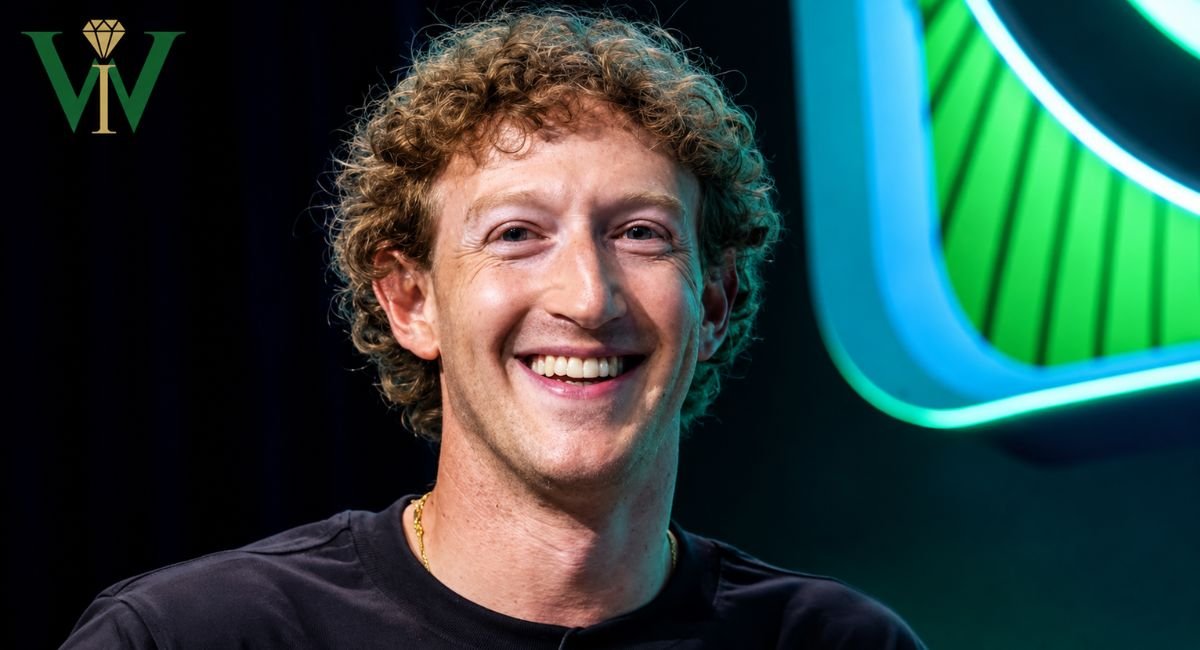
Mark Zuckerberg has turned a Harvard dorm-room idea into one of the world’s largest technology fortunes. In 2026, Mark Zuckerberg net worth is estimated at about $202.5 billion, according to Forbes’ real-time billionaire tracker. His fortune largely comes from Meta Platforms, where his ownership gives him both enormous financial value and strong voting control.
Beyond his Mark Zuckerberg wealth, his story includes a $1 salary, Facebook’s explosive growth, major investments, philanthropy, real estate, and family life. His journey shows how Meta shares and long-term ownership can create extraordinary wealth. But how did Zuckerberg build such a remarkable financial empire, and where does his fortune stand today?
Mark Zuckerberg Net Worth in 2026
What Is Mark Zuckerberg Net Worth in 2026?
The latest available estimates place Mark Zuckerberg net worth at roughly $200 billion in 2026. Forbes estimated his fortune at about $203.6 billion in July. His position can change quickly because much of his wealth remains connected to publicly traded Meta stock.
That makes his Mark Zuckerberg fortune different from a fixed cash balance. His wealth represents the estimated value of his ownership interests and other assets. When Meta shares rise, his paper fortune can climb by billions. When they fall, the same fortune can shrink just as quickly.
What Makes Up Zuckerberg’s Wealth?
The biggest part of his Mark Zuckerberg assets comes from his ownership of Meta. He also owns valuable property and other financial interests. However, those holdings remain much smaller than the technology stake that created most of his fortune.
Meta’s 2026 proxy confirms that Zuckerberg remains the company’s founder, chairman, and chief executive officer. His position gives him significant influence over Meta’s future strategy.
Why Does His Net Worth Change So Quickly?
Zuckerberg’s fortune follows the market more closely than a normal salary-based income stream. A small percentage change in Meta’s valuation can translate into billions of dollars in paper wealth because his ownership remains so large.
This is why Zuckerberg’s wealth history contains dramatic rises and falls. His financial journey resembles a roller coaster. The important difference is that the ride follows company valuation rather than daily spending.
How Mark Zuckerberg Makes His Money
Meta Ownership Is His Main Wealth Engine
The simplest answer is ownership. Zuckerberg makes most of his wealth through his Meta shares, not his salary. As Meta grows more valuable, his stake becomes more valuable. That relationship explains much of his extraordinary financial success.
Meta generated $200.97 billion in revenue during 2025. Its operating income reached $83.28 billion. The company also reported 3.58 billion average daily active people across its Family of Apps during December 2025.
Zuckerberg’s Income Is Different From His Wealth
It’s easy to confuse Mark Zuckerberg income with net worth. They’re not the same thing. Income is money received during a period. Net worth measures the estimated value of assets after subtracting liabilities.
His Mark Zuckerberg earnings therefore cannot be understood by looking at his paycheck alone. Most of his financial success comes from appreciating equity. That model is common among founders who retain large ownership stakes after taking their companies public.
A Founder’s Wealth Can Compound
Zuckerberg’s story shows why ownership can outperform salary over decades. Imagine owning a small slice of a company worth $10 billion. If that company later becomes worth $1 trillion, your stake can become extraordinarily valuable.
That principle helped drive Zuckerberg wealth growth. He didn’t need a huge annual paycheck. His ownership gave him exposure to Meta’s long-term expansion. In many ways, he owns a piece of the machine that generates the money.
Mark Zuckerberg’s Salary and Annual Earnings

Why Mark Zuckerberg Earns $1 Per Year
Mark Zuckerberg’s salary has famously remained at $1 annually. Meta’s 2026 proxy confirms that his base salary was $1 for 2025. It also states that he doesn’t participate in the annual bonus plan or receive additional equity awards.
That tiny executive salary sounds almost unbelievable beside his fortune. Yet the arrangement makes sense when you understand founder wealth. Zuckerberg already owns enormous equity. A higher paycheck would barely affect his personal financial position compared with changes in Meta’s market value.
Zuckerberg’s Compensation Includes Security Costs
Although his salary is only one dollar, his total reported compensation picture is more complicated. Meta provides substantial security arrangements because Zuckerberg faces unusual personal and public risks as the company’s leader.
Meta’s proxy describes his $1 base salary alongside his overall security program. This distinction matters when discussing CEO compensation. His salary is tiny, while certain business-related expenses connected to his role can be substantial.
Why Billionaires Don’t Need Huge Salaries
A salary pays you for working. Equity gives you ownership in something that may become far more valuable. Zuckerberg’s financial structure relies heavily on the second idea.
His annual salary would barely make a dent in his fortune. By contrast, a strong Meta stock performance can increase his wealth dramatically. That’s why stock-based wealth matters far more than traditional executive pay in his case.
Mark Zuckerberg’s Early Life and Family Background
Zuckerberg’s Childhood
Mark Zuckerberg was born on May 14, 1984, in White Plains, New York. His father, Edward Zuckerberg, worked as a dentist, while his mother, Karen, worked as a psychiatrist. He grew up in Dobbs Ferry with three sisters.
His interest in computers appeared early. Instead of simply using technology, he wanted to understand how it worked. That curiosity eventually led him toward programming. His early experiments would later become clues to the career of a future technology entrepreneur.
Early Programming Experiments
Zuckerberg began writing software while still young. His father introduced him to BASIC programming, while a private tutor helped develop his skills. He later created ZuckNet, which connected computers in his home with his father’s dental office.
He also developed the Synapse Media Player, a program that learned users’ listening preferences. Both projects demonstrated an important habit. Zuckerberg looked for ways software could understand people and connect them with useful information.
A Young Programmer With Big Ambitions
During high school, Zuckerberg showed strong academic ability across several fields. He attended Phillips Exeter Academy and excelled in mathematics, physics, astronomy, and classical studies.
His achievements weren’t limited to schoolwork. He also built software that attracted interest from major technology companies. Microsoft and AOL reportedly showed interest in his early music software. Zuckerberg ultimately chose education and entrepreneurship instead.
Mark Zuckerberg’s Education and Harvard Years
Life at Harvard University
Zuckerberg entered Harvard University in 2002. He studied psychology and computer science, combining technical skills with an interest in human behavior. That combination later became useful when building a platform designed around social interaction.
Harvard gave him more than an education. It provided a concentrated network of students who became the first users of Facebook. In that sense, the university became Zuckerberg’s earliest testing ground for his social networking idea.
CourseMatch and Facemash
While at Harvard, Zuckerberg created CourseMatch. The program allowed students to make class choices based partly on what other students selected. It was a small experiment in using information to connect people with similar interests.
He later created Facemash, which compared students’ photographs. Harvard shut the project down after it caused problems with university systems. Still, the experience gave Zuckerberg valuable lessons about demand, privacy, scale, and online behavior.
Why Zuckerberg Left Harvard
In early 2004, Zuckerberg began developing Facebook with fellow students. The project grew rapidly, and he eventually faced a major choice. He could continue his Harvard education or dedicate himself to the young company.
He chose Facebook. The future Harvard dropout left school during his sophomore year and moved toward Silicon Valley. Harvard later awarded him an honorary degree, recognizing the enormous impact of his work.
How Mark Zuckerberg Started Facebook
The Launch of The Facebook
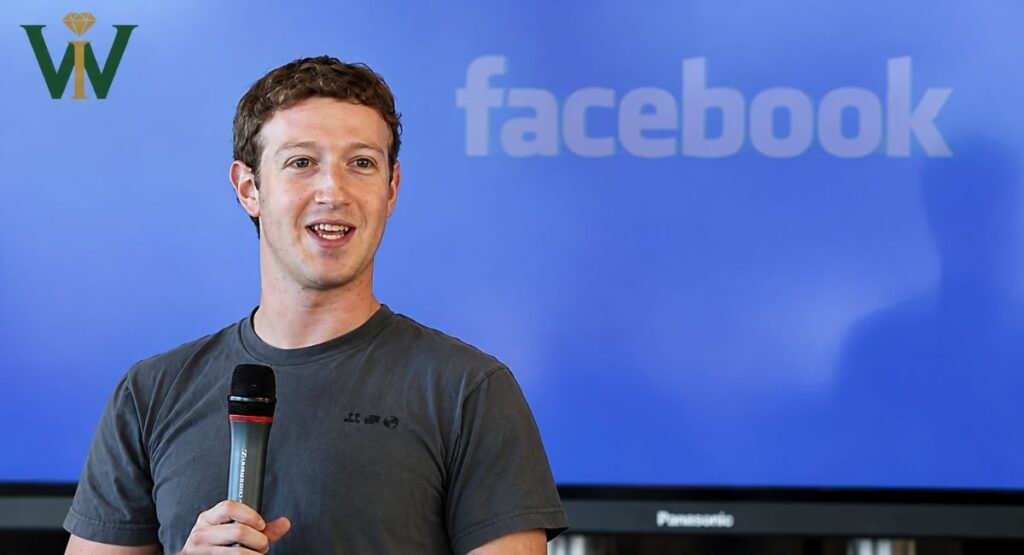
On February 4, 2004, Zuckerberg launched TheFacebook from his Harvard dorm room. The original website focused on helping students connect through profiles and photographs.
The concept was simple, yet the response was powerful. Students wanted an easy digital way to identify classmates and maintain social connections. That demand helped transform the project into a fast-growing social media company.
The Early Facebook Team
Zuckerberg didn’t build Facebook entirely alone. Dustin Moskovitz, Eduardo Saverin, and Chris Hughes played important roles during the company’s early period. Their contributions helped Facebook develop beyond its initial campus audience.
Investor Peter Thiel later became an important early supporter. His investment provided capital while Zuckerberg and his team focused on expansion. Facebook soon moved beyond Harvard and into other universities before reaching a much wider audience.
From Dorm Room to Silicon Valley
The company eventually moved operations to Palo Alto, California. The location placed Zuckerberg near investors, engineers, and other ambitious technology companies.
That move proved crucial. Silicon Valley offered access to capital and talent that could help Facebook scale. Zuckerberg had moved from a student project into the world of serious technology entrepreneurship.
Facebook’s Growth and Mark Zuckerberg’s Rising Wealth
Facebook’s Advertising Machine
Facebook’s greatest commercial breakthrough came from advertising. The company attracted enormous audiences, then gave businesses ways to reach those users with targeted advertisements.
As the platform expanded, the Facebook business became increasingly valuable. Its enormous user base created a powerful network effect. More users attracted more businesses. More businesses generated more advertising revenue. That cycle helped strengthen Facebook’s financial position.
How Facebook Increased Zuckerberg’s Fortune
Zuckerberg retained a meaningful ownership stake as Facebook expanded. That decision proved enormously important. Instead of selling most of his shares early, he maintained exposure to the company’s future growth.
This became one of the most important Mark Zuckerberg wealth milestones. His wealth increasingly reflected the company’s valuation. The Facebook founder therefore benefited whenever investors placed a higher value on the business.
Facebook Became a Technology Giant
Facebook eventually expanded beyond its original platform. The company acquired Instagram and WhatsApp while building Messenger into a major communication service.
These businesses strengthened the broader ecosystem. They also helped Facebook become a global technology company rather than merely a social networking website. That transformation laid the groundwork for Meta’s later expansion.
Facebook IPO and Major Wealth Milestones
Facebook’s Initial Public Offering
The Facebook IPO took place in May 2012. Facebook became a publicly traded company, allowing investors to buy and sell its shares through the stock market.
The Facebook initial public offering represented a major milestone in Zuckerberg’s career. Public trading gave the company a visible market value. It also made his equity holdings easier to calculate using a live market price.
Zuckerberg’s Billionaire Wealth Journey
Zuckerberg became one of the world’s youngest billionaires as Facebook’s valuation climbed. His fortune continued rising as the company expanded its advertising business and user base.
His Zuckerberg billionaire status became more than a headline. It reflected a new era of technology founders whose wealth came primarily from equity. Instead of earning millions through salaries, they held pieces of companies worth hundreds of billions.
Wealth Can Rise and Fall
Zuckerberg’s wealth history hasn’t moved in a straight line. Meta’s share price has experienced major declines and powerful recoveries. During difficult market periods, his fortune has fallen sharply.
That volatility teaches an important lesson. Billionaire net worth estimates are often paper values. A founder can become billions richer without selling shares. The same person can lose billions on paper when investors reduce the company’s valuation.
Meta Platforms and Mark Zuckerberg’s Wealth
Why Facebook Became Meta
In 2021, Facebook changed its corporate name to Meta Platforms. The decision reflected Zuckerberg’s broader vision for digital connection, virtual environments, artificial intelligence, and future computing.
The rebrand didn’t erase Facebook. Instead, Facebook became one part of a larger ecosystem. Meta now operates major platforms including Instagram, WhatsApp, Messenger, Facebook, and Reality Labs.
Meta’s Financial Strength
Meta reported $200.97 billion in 2025 revenue. Its operating income reached $83.28 billion, while Family of Apps services reached billions of people every day.
Those figures help explain the company’s enormous Meta valuation. A business with such scale can generate tremendous cash flow. As a result, investors closely watch its advertising performance, artificial intelligence spending, and future growth plans.
Zuckerberg’s Voting Control
Zuckerberg’s ownership structure gives him unusual authority. Meta’s dual-class shares provide stronger voting rights to Class B stock. The company’s 2026 proxy reported that Zuckerberg held nearly all Class B shares and about 60.8% of total voting power.
This distinction explains his Mark Zuckerberg ownership stake. His economic ownership and voting control aren’t identical. His Mark Zuckerberg equity gives him significant financial exposure, while his voting rights give him exceptional influence over Meta’s direction.
Mark Zuckerberg’s Investments and Business Assets
Zuckerberg’s Meta Stock Holdings
The most important part of his investment portfolio remains Meta. His Mark Zuckerberg stock holdings connect his fortune directly to the company he founded.
This arrangement creates both enormous opportunity and risk. If Meta performs strongly, his equity can appreciate substantially. If the company faces a major decline, his net worth can fall just as quickly.
Zuckerberg’s Broader Assets
Beyond Meta, Zuckerberg has accumulated significant property. His Mark Zuckerberg investments therefore include a combination of corporate equity and physical assets.
His property portfolio includes homes and land in California and Hawaii. These holdings provide privacy and diversification. Yet they remain relatively small compared with his Meta stake.
Why Equity Matters More Than Cash
A common mistake is assuming billionaires hold their entire fortune in cash. Zuckerberg’s wealth works differently. Much of it exists as ownership in businesses and other assets.
That’s why his Mark Zuckerberg financial profile can appear enormous without suggesting he has hundreds of billions of dollars sitting in a checking account. His fortune is largely tied to assets whose values fluctuate.
Mark Zuckerberg’s Philanthropy and Charitable Work
Chan Zuckerberg Initiative
Zuckerberg and Priscilla Chan launched the Chan Zuckerberg Initiative in 2015. The organization focuses on science, education, and community work. It aims to use technology and collaboration to address difficult social and scientific problems.
CZI has supported research and programs across several areas. Its grant work includes science, education, community initiatives, and other projects. The organization says it has committed billions of dollars through grants and ventures.
The 99 Percent Wealth Pledge
Zuckerberg and Chan announced a plan to give away 99% of their Facebook shares during their lifetimes. This became one of the most recognizable examples of a modern wealth pledge.
Their approach connects personal wealth with long-term philanthropy. Rather than treating giving as a side activity, they created an organization designed to deploy resources over decades.
Science, Education and Community Work
CZI has invested heavily in scientific research. It has also supported education initiatives and local communities. The strategy focuses on building systems that can create lasting benefits rather than simply funding short-term projects.
This form of billionaire philanthropy shows how enormous private fortunes can influence research and public-interest work. It also gives Zuckerberg a second legacy beyond technology.
Mark Zuckerberg’s Real Estate and Luxury Lifestyle
Palo Alto Properties
Zuckerberg owns notable Palo Alto real estate. His primary residence became even more private after he acquired neighboring properties.
The arrangement created a form of private compound around his home. Privacy is particularly valuable for a person whose name and image are recognized around the world.
Hawaii and Kauai Holdings
Zuckerberg and Chan have also accumulated substantial land in Hawaii. Their properties on Kauai have attracted attention because of their size and location.
The land forms part of the couple’s broader Mark Zuckerberg property portfolio. Unlike Meta shares, these assets don’t determine most of his net worth. Still, they represent an important part of his personal lifestyle and privacy strategy.
Lake Tahoe and Luxury Property
The couple also owns significant Lake Tahoe real estate. Waterfront property in the region commands premium prices, making it another notable part of Zuckerberg’s portfolio.
His Mark Zuckerberg houses and land holdings show how wealth can translate into privacy. These aren’t simply luxury purchases. Large properties can create distance from public attention while giving families secure private spaces.
Mark Zuckerberg’s Wife, Children and Personal Life
Who Is Mark Zuckerberg’s Wife?
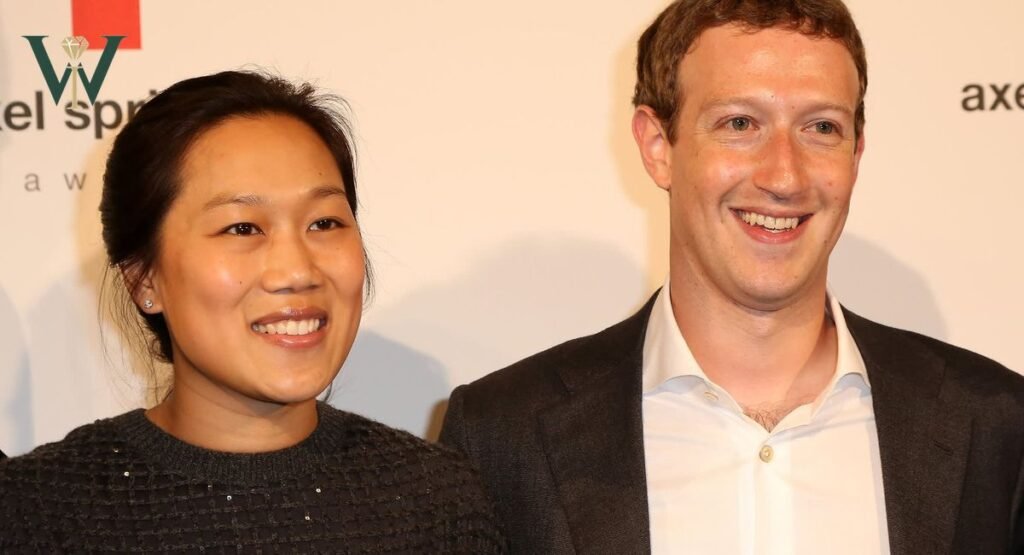
Mark Zuckerberg’s wife, Priscilla Chan, met Zuckerberg while they were students at Harvard. Chan later became a physician and philanthropist. The couple married in 2012, beginning a partnership that extends into both family life and charitable work.
Chan has played an important role in their shared philanthropic efforts. Through CZI, the couple has directed resources toward science, education, and community initiatives. Their partnership has therefore influenced more than their private lives.
Mark Zuckerberg’s Children and Family
Zuckerberg and Chan have three daughters. Their children are Maxima Chan Zuckerberg, commonly called Max, August Zuckerberg, and Aurelia Zuckerberg.
The Zuckerberg family generally maintains strong privacy around their children. That approach is understandable given the enormous public interest surrounding Zuckerberg. The family spends time away from the intense spotlight that follows Meta’s founder.
Zuckerberg’s Hobbies and Interests
Zuckerberg’s Zuckerberg personal life includes interests outside technology. He has trained in Brazilian Jiu-Jitsu and mixed martial arts. He has also shown interest in aviation and fitness.
These hobbies provide a different picture of the billionaire entrepreneur. Instead of spending every moment behind a computer, he has pursued physical challenges and personal goals. His lifestyle remains highly private despite his extraordinary public profile.
Mark Zuckerberg Net Worth 2026: Wealth Outlook and Future
What Could Increase Zuckerberg’s Wealth?
The future of Mark Zuckerberg net worth 2026 depends heavily on Meta’s performance. Artificial intelligence is especially important because Meta continues investing heavily in computing infrastructure, AI talent, and new products.
Meta said its board had actively overseen AI strategy and infrastructure initiatives. The company also described personal superintelligence as part of its broader long-term vision.
The Role of Artificial Intelligence
AI could become another major growth engine for Meta. Better recommendation systems can increase engagement. Smarter advertising tools can improve business performance. New AI products could also create entirely different revenue opportunities.
That doesn’t guarantee future gains. Technology markets remain unpredictable. Zuckerberg’s fortune will continue responding to investor expectations, company earnings, spending decisions, and the broader economy.
Zuckerberg’s Long-Term Legacy
Zuckerberg’s career began with a simple idea about connecting students. More than two decades later, that idea has become a global technology empire.
His Mark Zuckerberg wealth milestones tell only part of the story. His greater legacy may come from the systems he helped create, the technologies Meta develops, and the philanthropic work funded through the Chan Zuckerberg Initiative.
Ultimately, Zuckerberg’s financial journey shows the extraordinary power of ownership. His Mark Zuckerberg income from salary remains almost irrelevant beside his equity. His fortune grew because he kept a meaningful stake in a company that reached billions of people.
As Meta moves deeper into artificial intelligence and new computing platforms, his wealth will likely remain volatile. That makes Mark Zuckerberg net worth a figure worth checking by date rather than treating as permanent. His career, meanwhile, offers a striking example of how technology, ownership, ambition, and long-term thinking can reshape a person’s financial life.
Conclusion
Mark Zuckerberg’s journey from a Harvard student to a global technology billionaire is anything but ordinary. His Mark Zuckerberg net worth largely comes from Meta ownership rather than his modest salary. Facebook created the foundation, while Meta’s continued growth has expanded his financial empire.
Today, his wealth also includes investments, real estate, and major philanthropic commitments. His partnership with Priscilla Chan has further shaped his public legacy through the Chan Zuckerberg Initiative. As Meta invests deeper into artificial intelligence and future technologies, Zuckerberg’s fortune could continue changing. For now, his story remains a powerful example of how innovation, ownership, and long-term vision can transform a simple idea into extraordinary wealth.
FAQs About Mark Zuckerberg
Mark Zuckerberg was 23 years old when Forbes recognized him as the world’s youngest self-made billionaire in 2008. His wealth was estimated at about $1.5 billion at the time.
No, Zuckerberg wasn’t born into a billionaire family. He grew up in a comfortable, well-educated household in Dobbs Ferry, New York. His father was a dentist and his mother was a psychiatrist.
Mark Zuckerberg and Priscilla Chan have three daughters: Maxima, commonly called Max, August, and Aurelia.
Mark Zuckerberg has had one marriage. He married Priscilla Chan on May 19, 2012, and they remain married.
Dustin Moskovitz is often described as one of Zuckerberg’s closest longtime friends and early Facebook collaborators. He was among the people who helped Zuckerberg launch Facebook at Harvard.

Tanzeela is a writer and researcher at WorthIcons, covering celebrity net worth, business, careers, wealth, and biographical stories. She researches publicly available information from reputable sources and aims to present financial estimates clearly and responsibly.
1 thought on “Mark Zuckerberg Net Worth 2026: Salary, Career, Meta Wealth, Wife & Lifestyle”