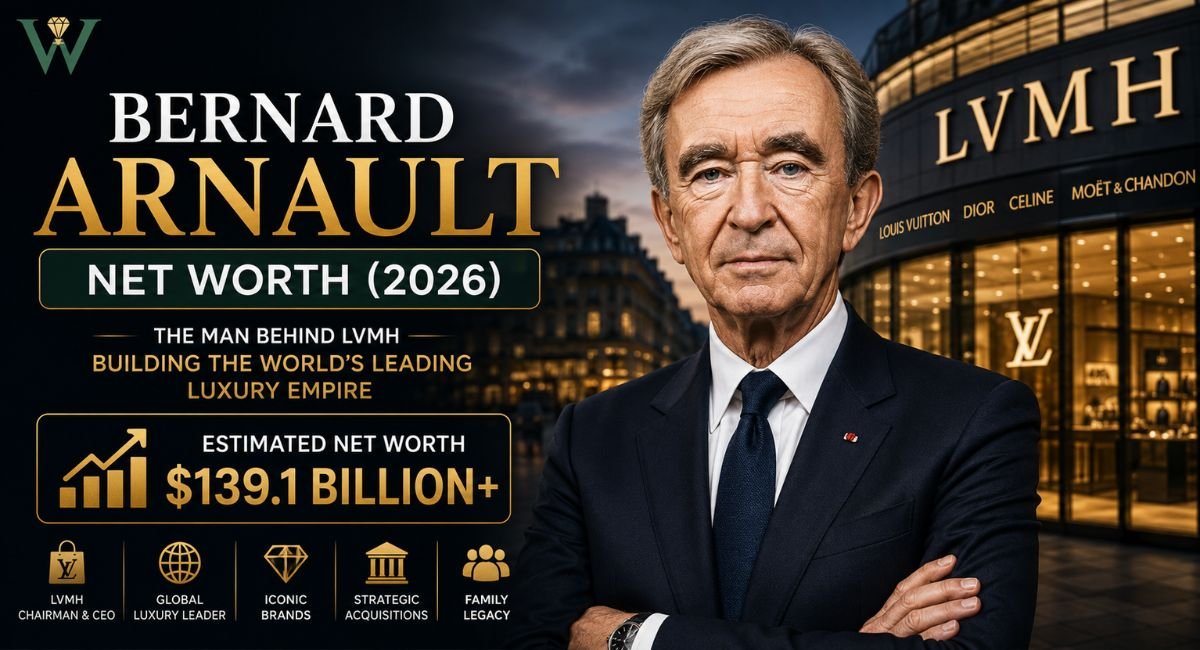
Bernard Arnault has built one of the world’s most formidable luxury fortunes through LVMH, the group behind iconic names such as Louis Vuitton and Dior. As of September 2026, Forbes estimates the Bernard Arnault net worth at $139.1 billion, placing him among the world’s wealthiest people.
His journey began with a family business before he entered luxury through the Christian Dior deal. Today, his wealth reflects LVMH ownership, strategic acquisitions, Bernard Arnault investments, and a vast global brand portfolio. Yet his fortune can change quickly as LVMH shares move, making his billionaire ranking a constantly shifting figure.
Bernard Arnault Personal Stats, Early Life & Education
Bernard Arnault’s story begins in Roubaix, France, where he was born on March 5, 1949. His family had an industrial background, which gave him an early view of business and investment. He later studied at Ecole Polytechnique, one of France’s leading institutions. That technical education helped shape his analytical approach to business. Today, his French citizenship and roots remain closely connected to his public identity.
His personal profile also helps explain the scale of the Bernard Arnault family enterprise. He is married and has five children, all of whom have worked in different leadership roles within LVMH. The company confirms that Arnault became its majority shareholder in 1989 and has served as chairman and CEO since then.
Bernard Arnault Age, Birthplace, Nationality & Personal Details
As of 2026, Arnault is 77 years old. He lives primarily in Paris France and remains closely associated with French culture and luxury craftsmanship. His personal profile includes French nationality, a long marriage, and five children. These details often appear alongside his billionaire rankings and corporate achievements.
Bernard Arnault Education at École Polytechnique
His education at Ecole Polytechnique gave Arnault a strong foundation in engineering and structured problem-solving. Rather than following a traditional fashion path, he entered business with a technical mindset. That combination later became useful when he evaluated companies, assets, brands, and complex corporate structures.
Bernard Arnault Parents, Family Background & Childhood
Arnault grew up in an industrial family. His father built a successful construction business, and Arnault eventually used family capital to pursue larger opportunities. His background gave him access to business experience early in life. However, his later rise depended heavily on his own acquisition strategy and management decisions.
Bernard Arnault’s Early Career and Business Journey
Arnault’s Bernard Arnault career began in engineering rather than fashion. After graduating, he joined Ferret-Savinel, his family’s construction company. He eventually moved into senior management and became chairman in 1978. His early experience taught him how capital, property, restructuring, and corporate control could reshape a company’s future.
The decisive shift came in the 1980s. Arnault reorganized Financière Agache and focused on Christian Dior as the cornerstone of a new luxury strategy. According to LVMH, he used his business background to rebuild the group around premium brands. That move laid the groundwork for his later business empire.
Bernard Arnault’s Start in the Family Construction Business
The construction business provided Arnault with his first serious management experience. He learned about operations, financing, negotiations, and corporate decision-making. Those skills later proved valuable when he began targeting luxury companies. His approach was practical rather than purely creative.
Bernard Arnault’s Move Into Real Estate and Business
Arnault also gained experience through real estate and corporate restructuring. These ventures helped him understand how undervalued assets could produce significant returns. More importantly, they strengthened his confidence in acquiring businesses and changing their strategic direction.
Christian Dior Acquisition and the Turning Point in His Career
The Christian Dior acquisition in 1984 became a major turning point. Forbes reports that Arnault invested about $15 million from his family’s business wealth to acquire Dior. He recognized that a powerful heritage brand could become much more valuable with disciplined ownership and global expansion.
Bernard Arnault’s Rise as a Luxury Business Leader
Arnault gradually became known for combining financial discipline with brand preservation. He didn’t treat luxury labels like ordinary consumer businesses. Instead, he protected their heritage while expanding distribution, pricing power, and international reach. That formula became central to his rise.
How Bernard Arnault Built the LVMH Luxury Empire
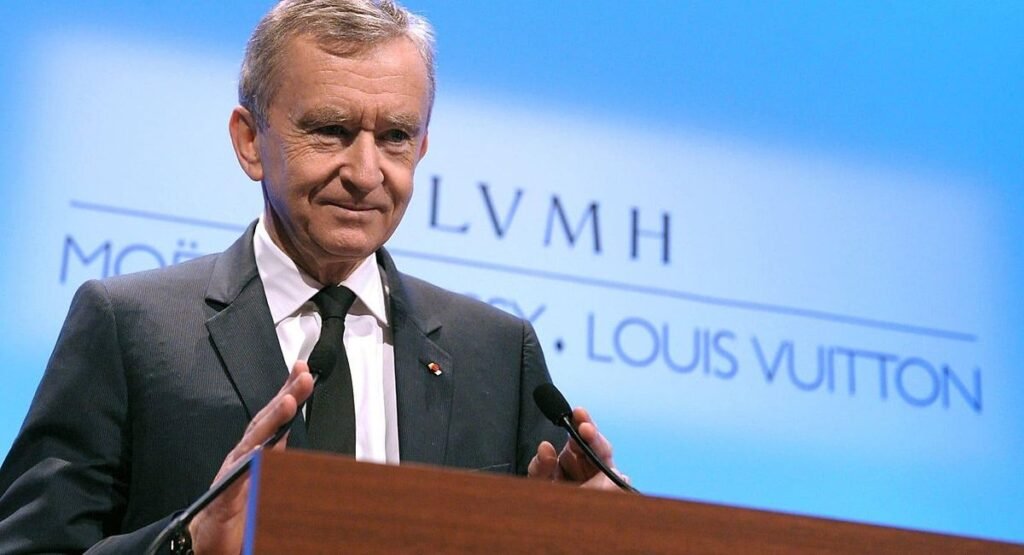
Arnault’s greatest achievement came through LVMH, which became the centerpiece of his wealth. In 1989, he became the company’s majority shareholder after the merger that created Moët Hennessy Louis Vuitton. Since then, he has built a diversified collection of fashion, jewelry, cosmetics, wines, spirits, and retail businesses.
The genius of the model lies in diversification without destroying exclusivity. A luxury brand needs scarcity, identity, craftsmanship, and emotional appeal. Arnault expanded the portfolio while allowing individual houses to maintain distinct personalities. This strategy transformed LVMH into a global luxury conglomerate with extraordinary brand recognition.
Bernard Arnault and the Formation of LVMH
The creation of LVMH brought together major French luxury interests under one corporate structure. Arnault saw an opportunity to build a group that could compete globally. His leadership then turned individual houses into parts of a much larger luxury ecosystem.
Acquisitions That Expanded Bernard Arnault’s Luxury Empire
Acquisitions became one of Arnault’s defining strategies. Rather than building every brand internally, LVMH purchased established names with strong heritage. The group could then provide capital, management expertise, global distribution, and marketing support while protecting each brand’s identity.
Louis Vuitton, Moët Hennessy and the Growth of LVMH
Louis Vuitton became one of the most valuable pillars of LVMH. Moët Hennessy strengthened its wines and spirits portfolio. Together, these businesses gave LVMH exposure to different luxury categories and consumer markets. This diversification helped make the group more resilient.
Tiffany & Co. Acquisition and Global Expansion
The Tiffany & Co acquisition added an iconic American jewelry house to LVMH. LVMH announced the transaction at approximately $16.2 billion in equity value. The deal strengthened the group’s jewelry division and expanded its American luxury presence.
Bernard Arnault’s Strategy for Managing Luxury Brands
Arnault’s strategy centers on long-term brand value. He generally avoids treating heritage labels like short-lived trends. Instead, LVMH invests in craftsmanship, stores, advertising, designers, and customer experience. That approach helps preserve pricing power and makes luxury goods feel distinctive.
Bernard Arnault Net Worth 2026 and Wealth Ranking
The latest Bernard Arnault net worth 2026 figure depends on the date and valuation method. Forbes’ real-time list showed Arnault and his family at $139.1 billion on September 1, 2026, placing them at No. 12 globally. Forbes’ annual 2026 billionaire list used $171 billion and ranked the family No. 7.
That difference isn’t necessarily an error. Billionaire wealth changes as publicly traded shares move. Since much of Arnault’s Bernard Arnault wealth connects to LVMH and related holdings, market swings can alter his estimated fortune by billions. Forbes has also documented sharp declines during periods of weaker luxury demand.
| Wealth measure | Reported figure | Context |
| Forbes real-time wealth | $139.1 billion | September 1, 2026 |
| Forbes 2026 annual ranking | $171 billion | Annual billionaire valuation |
| Real-time global position | No. 12 | September 1, 2026 |
| Annual 2026 position | No. 7 | Forbes 2026 list |
Bernard Arnault Net Worth in 2026
The current estimate should always include a date. A billionaire’s net worth isn’t the same as cash sitting in a bank account. It represents estimated ownership stakes, investments, and other assets after applying valuation assumptions.
Bernard Arnault’s Forbes Wealth Ranking
Bernard Arnault Forbes rankings have changed dramatically over the years. He reached the top position several times during periods of strong LVMH performance. His ranking can now shift quickly as technology fortunes and luxury-market valuations change.
Bernard Arnault Net Worth History and Major Changes
His Bernard Arnault fortune has experienced substantial peaks and declines. Forbes reported that LVMH’s falling stock price erased nearly $50 billion from his fortune during one 2026 downturn. This demonstrates how closely his wealth follows the market.
Why Bernard Arnault’s Wealth Rises and Falls
Luxury demand, exchange rates, geopolitical events, consumer confidence, and LVMH shares all matter. When investors expect stronger luxury sales, LVMH’s valuation can rise. When demand weakens, the opposite can happen quickly. Arnault’s wealth therefore remains highly dynamic.
LVMH Share Price and Its Impact on Bernard Arnault’s Fortune
Because Arnault controls a substantial economic interest connected to LVMH, share-price changes can create enormous paper gains or losses. His net worth should therefore be viewed as an estimate rather than a fixed salary or bank balance.
Bernard Arnault’s Salary, Income & Major Sources of Wealth
Arnault’s Bernard Arnault source of wealth is primarily connected to LVMH ownership and his family’s investment structures. His fortune isn’t built mainly from a conventional executive paycheck. Instead, the larger engine is equity ownership. When the businesses he owns become more valuable, his wealth can rise substantially.
His Bernard Arnault income can also include executive compensation, dividends, and returns from other investments. However, salary alone doesn’t explain his billionaire status. The real financial story is ownership. This distinction matters because many readers confuse annual income with overall wealth.
Bernard Arnault’s LVMH Salary and Executive Compensation
As LVMH CEO and LVMH chairman, Arnault receives executive compensation. Yet his compensation package represents only one part of his financial picture. Equity ownership and the value of his broader holdings have a far greater effect on his estimated fortune.
LVMH Shares and Family Ownership
Family ownership provides a major connection between LVMH and Arnault’s wealth. Through structures such as Agache, the family maintains substantial influence. Forbes identifies LVMH as the primary source of his wealth.
Dividends, Investments and Other Income Sources
Dividends can provide recurring cash flow from valuable corporate holdings. Arnault also has exposure to investment businesses beyond LVMH. However, these streams remain smaller pieces of a fortune dominated by equity ownership and corporate value.
How Bernard Arnault’s Business Holdings Generate Wealth
The model is straightforward. Arnault owns valuable assets, those assets produce earnings, and market investors assign them valuations. If the underlying businesses expand, the value of his holdings can increase. It’s a compounding model built around ownership rather than wages.
LVMH Brands, Companies & Business Interests
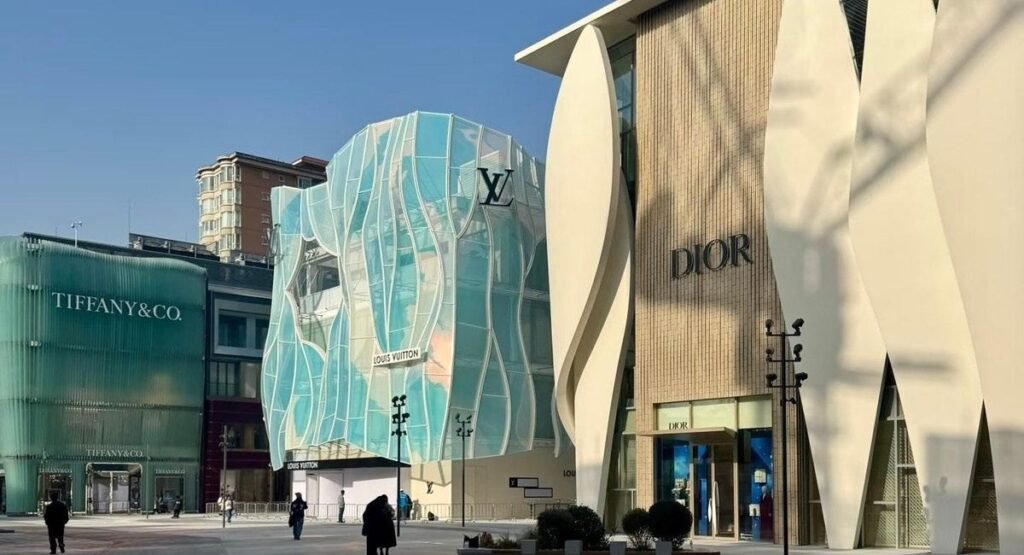
The scale of LVMH brands explains why Arnault commands such enormous influence. The group spans fashion, leather goods, jewelry, watches, perfumes, cosmetics, wines, spirits, and selective retail. Forbes says the empire includes 75 fashion and cosmetics brands.
Its portfolio includes Louis Vuitton, Christian Dior, Sephora, Tiffany & Co, and many other global names. Moët Hennessy adds premium wines and spirits to the mix. This broad portfolio gives LVMH exposure to different customer segments and geographic markets.
Louis Vuitton, Dior and Other Fashion Houses
Louis Vuitton remains one of the group’s best-known luxury houses. Christian Dior provides another cornerstone. Other fashion names add breadth to LVMH’s portfolio. Each house targets a particular identity while benefiting from the resources of the wider group.
Sephora, Fendi, Givenchy and Celine
Sephora gives LVMH major exposure to beauty retail. Fendi, Givenchy, and Celine strengthen the fashion portfolio. Together, these businesses demonstrate how Arnault built a network rather than relying on one flagship label.
Tiffany & Co., Bulgari and Luxury Jewelry Brands
Jewelry has become increasingly important within LVMH. Tiffany & Co and Bulgari provide global recognition in high jewelry and watches. Their presence strengthens the group’s position in one of luxury’s most prestigious categories.
Moët Hennessy and LVMH Wines and Spirits
Moët Hennessy connects the group with champagne, wine, cognac, and other premium beverages. These brands operate differently from fashion houses. Yet they share an important characteristic: heritage can create pricing power and customer loyalty.
Bernard Arnault’s Other Business Interests
Arnault’s wider interests extend beyond traditional luxury. His family holding structures also support investment activities. This diversification gives the family access to technology, consumer businesses, and other sectors beyond fashion and retail.
Bernard Arnault’s Investments, Assets, Properties & Private Jet
Beyond LVMH, Bernard Arnault investments include holdings connected to his family’s broader investment structure. His Agache holding company plays an important role in organizing family assets and business interests. Forbes also reports that Agache backs Aglaé Ventures, which has invested in companies including Netflix and ByteDance.
Arnault’s Bernard Arnault assets also include luxury real estate and valuable personal holdings. Public reports frequently discuss his art interests and high-end lifestyle. However, private assets can be difficult to value accurately. Reliable reporting matters more than viral estimates when assessing a billionaire’s portfolio.
Bernard Arnault’s Agache Holding Company
Agache functions as a major family investment vehicle. It helps organize ownership, investments, and long-term family interests. The structure gives the Arnault family a strategic framework for managing wealth beyond daily LVMH operations.
Aglaé Ventures and Technology Investments
Aglaé Ventures reflects Arnault’s interest in technology and growth businesses. Forbes has linked the venture platform to investments involving Netflix and ByteDance. This demonstrates that his investment outlook extends beyond the luxury industry.
Bernard Arnault’s Real Estate and Luxury Properties
Arnault and his family have been associated with prestigious properties in France and elsewhere. Real estate can serve both personal and investment purposes. Still, exact valuations and ownership details often remain private, so readers should treat unofficial figures cautiously.
Bernard Arnault’s Art Collection and Valuable Assets
Art fits naturally with Arnault’s interest in culture and luxury. Collecting valuable works can preserve capital while also supporting cultural influence. His approach reflects the broader connection between wealth, art, craftsmanship, and French heritage.
Bernard Arnault’s Private Jet, Yacht and Luxury Lifestyle Assets
High-net-worth individuals often maintain access to private aviation and luxury travel. Arnault’s lifestyle receives significant public attention. Yet the precise value and ownership structure of every aircraft or yacht claim can change, making verified reporting essential.
Bernard Arnault’s Wife, Children & Family Life
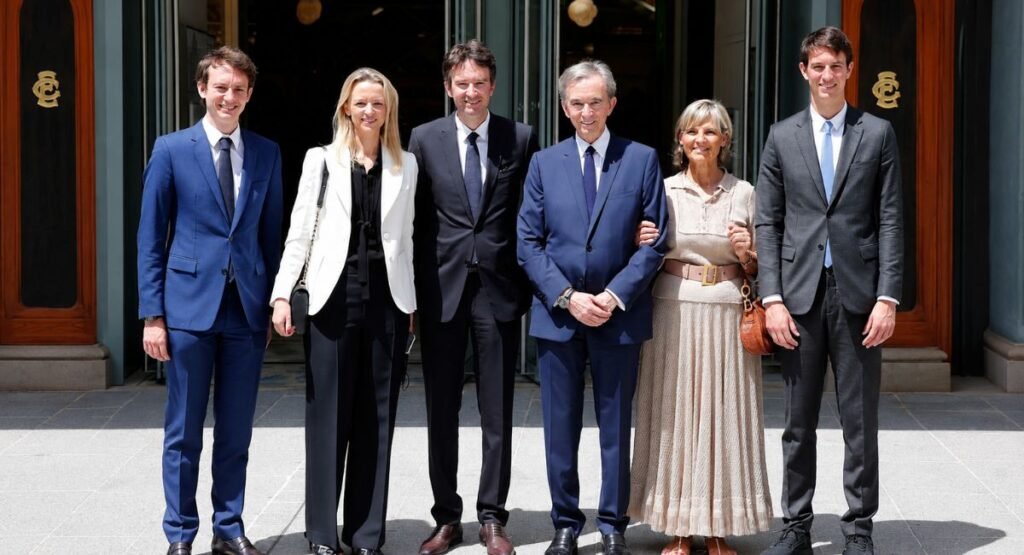
Family plays a central role in the Arnault business structure. His Bernard Arnault wife, Hélène Mercier-Arnault, is a concert pianist. Forbes notes that Arnault reportedly impressed her by playing classical composers on the piano. Their family includes five children, several of whom hold important positions at LVMH.
The Bernard Arnault children have increasingly become part of the group’s leadership story. Their roles have fueled discussion about succession and the future of the family empire. Forbes reported in 2026 that all five children work in leadership positions within LVMH.
Bernard Arnault’s Wife Hélène Mercier-Arnault
Helene Mercier is a professional concert pianist. Her artistic career contrasts sharply with Arnault’s corporate world. Their relationship has often attracted attention because music and luxury culture intersect naturally within the family’s public image.
Bernard Arnault’s Five Children
Arnault has five children, and each has developed a career connected to the family’s business interests. Their involvement has made the next generation increasingly important to investors watching LVMH’s long-term leadership.
How Bernard Arnault’s Children Work at LVMH
The children have held positions across major LVMH businesses and functions. Their responsibilities give them operational experience. This approach can also help the family prepare future leaders who understand the group from inside.
Bernard Arnault Family’s Role in Business
The family’s role extends beyond executive titles. Ownership, governance, investment structures, and succession planning all connect the family to LVMH. This creates a long-term model where corporate control can remain within the family.
LVMH Succession Plans and the Next Generation
Succession remains one of the most watched issues surrounding Arnault. With five children involved, the eventual transition could shape LVMH for decades. The key question isn’t simply who succeeds Arnault. It’s how the family preserves the group’s culture while maintaining investor confidence.
Bernard Arnault’s Leadership, Achievements & Influence in Luxury Fashion
Arnault’s leadership transformed LVMH into a dominant global luxury group. His approach combines acquisition discipline with creative independence. Instead of forcing every brand into one mold, he allows individual houses to maintain their identities. This balance helped strengthen LVMH’s global luxury market position.
His achievements also extend beyond financial performance. Arnault helped make luxury a major global business sector while maintaining strong links to craftsmanship and culture. His influence reaches fashion, jewelry, beauty, hospitality, wines, spirits, retail, and art. Few executives have shaped the modern fashion and retail landscape so extensively.
Bernard Arnault’s Leadership at LVMH
As corporate leadership goes, Arnault has maintained an unusually long tenure. He became LVMH’s majority shareholder in 1989 and has remained chairman and CEO since then. His consistency has helped the company pursue long-term strategies rather than short-term fashion cycles.
Major Business Achievements and Industry Milestones
Major milestones include the expansion of Louis Vuitton, the growth of Dior, the development of LVMH’s jewelry division, and the acquisition of Tiffany. These business acquisitions helped create a portfolio with exceptional global reach.
Bernard Arnault’s Influence on Global Luxury Fashion
Arnault helped redefine how luxury companies scale. His strategy proved that global growth doesn’t necessarily require sacrificing heritage. By combining capital with creative autonomy, LVMH created a model other luxury groups continue to study.
Awards, Recognition and Billionaire Rankings
Arnault has received major French honors, including the Grand Cross of the Légion d’Honneur and Commander of Arts and Letters. LVMH also confirms his election to France’s Academy of Moral and Political Sciences in December 2024.
Why Bernard Arnault Remains a Powerful Luxury Executive
His influence comes from more than personal wealth. He controls an ecosystem of globally recognized brands, experienced executives, creative talent, and valuable distribution networks. That combination gives him unusual influence across the modern luxury economy.
Bernard Arnault’s Philanthropy, Lifestyle & Future Business Plans
Arnault’s public legacy also includes philanthropy and cultural support. One major example is the Notre Dame restoration effort. After the 2019 fire, Arnault and LVMH pledged €200 million toward rebuilding the cathedral. LVMH says the restoration was completed and Notre-Dame reopened to the public in 2024.
The family’s cultural involvement also extends to major national events. LVMH became a lead sponsor of the Paris Olympics in 2024. These activities reinforce Arnault’s public connection to art, craftsmanship, and national culture. Looking ahead, succession and continued global expansion will likely define the next chapter.
Bernard Arnault’s Philanthropic Contributions
Philanthropy allows Arnault to support areas closely linked to culture and education. His giving often focuses on artistic heritage, craftsmanship, medical initiatives, and major cultural projects. This creates a philanthropic profile that mirrors the values associated with his business empire.
Notre-Dame Restoration and Cultural Support
The €200 million commitment to Notre-Dame became one of his most visible charitable contributions. LVMH also supported documentation and research surrounding the reconstruction. The project highlighted the value of traditional craftsmanship and modern restoration technology.
LVMH and the Paris 2024 Olympics
LVMH’s involvement with the 2024 Olympics connected luxury brands with a major international event. The partnership showcased French creativity and craftsmanship to a worldwide audience. It also strengthened the group’s cultural presence beyond traditional retail and fashion.
Bernard Arnault’s Luxury Lifestyle and Personal Interests
Arnault’s lifestyle reflects his position in the luxury world, but his interests aren’t limited to expensive possessions. Art, classical music, architecture, craftsmanship, and culture feature prominently in his public image. These interests align closely with LVMH’s own brand philosophy.
Bernard Arnault’s Future Plans for LVMH and His Family
The next chapter will likely focus on succession, brand expansion, and maintaining LVMH’s pricing power. The family’s growing executive involvement makes succession especially important. If the next generation preserves Arnault’s acquisition discipline while adapting to changing consumers, LVMH could remain a formidable luxury force.
Conclusion
The story behind Bernard Arnault net worth 2026 is ultimately a story about ownership. His fortune grew because he accumulated valuable brands, protected their identities, and expanded them globally. LVMH became the engine of his wealth while family investment structures added another layer of diversification.
For readers tracking Bernard Arnault wealth, the biggest lesson is simple: billionaire fortunes can move quickly. Forbes’ 2026 figures show how dramatically his valuation can change with LVMH’s market performance. His legacy, however, reaches beyond any single number. He built one of the world’s most influential luxury groups and positioned his family to shape its future.
FAQs
Bernard Arnault built his fortune mainly through his controlling interest in LVMH, the luxury group behind Louis Vuitton, Dior, Tiffany & Co., and many other brands.
His fortune fell sharply as LVMH’s share price declined during the luxury-market slowdown. Forbes reported that nearly $50 billion was wiped from his fortune during 2026, although the exact loss varies by date and valuation.
Yes. The Arnault family controls Christian Dior through its holding structure, while Dior is closely integrated with the LVMH group.
In 2026, the Arnault family regained the top position in Challenges’ ranking of France’s largest fortunes, ahead of the Hermès heirs and the Wertheimer family.
Yes. Bernard Arnault and LVMH pursued Gucci but ultimately lost the battle to François Pinault’s group, now known as Kering.

Tanzeela is a writer and researcher at WorthIcons, covering celebrity net worth, business, careers, wealth, and biographical stories. She researches publicly available information from reputable sources and aims to present financial estimates clearly and responsibly.