
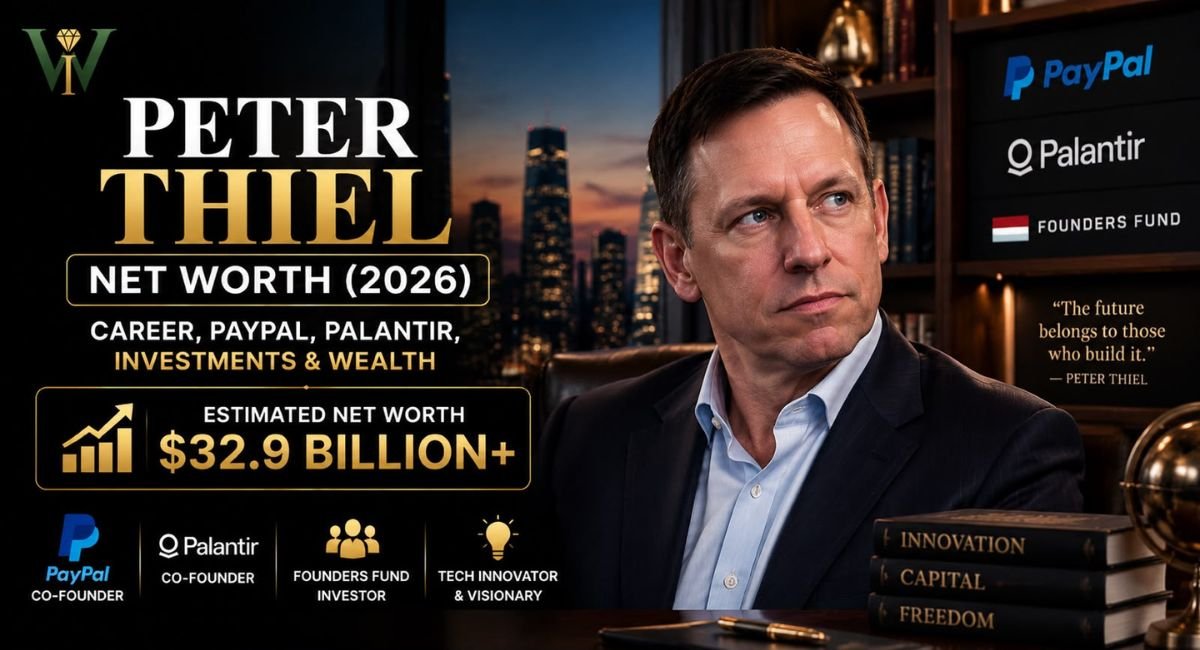
Peter Thiel’s net worth reflects a remarkable journey through technology, entrepreneurship, and strategic investing. As a Peter Thiel billionaire, he has built substantial wealth through companies, venture capital, and early investments in major technology businesses. His Peter Thiel investments include influential startups and firms that have shaped the modern tech industry.
Beyond his financial success, his Peter Thiel career spans PayPal, Palantir, Founders Fund, and other ambitious ventures. Understanding his Peter Thiel wealth requires looking at his company stakes, investments, and long-term business strategy. This article explores Peter Thiel’s biography, fortune, assets, business ventures, financial career, personal life, and family while examining the key factors behind his extraordinary net worth.
Peter Thiel Net Worth 2026: How Much Is He Worth?
Today, Peter Thiel wealth stands at roughly $32.9 billion according to Forbes’ September 4, 2026 real-time estimate. That figure can move quickly because much of his fortune depends on company valuations and publicly traded shares. Therefore, Peter Thiel fortune shouldn’t be treated like money sitting entirely in a bank account.
His wealth has several major pillars. Peter Thiel assets include interests connected to Palantir, Founders Fund investments, private companies, and other holdings. His biggest advantage has been ownership rather than salary. In simple terms, he became extremely wealthy by owning pieces of businesses that grew dramatically.
| Wealth Driver | Role in His Fortune |
| PayPal | First major technology exit |
| Early investment produced enormous returns | |
| Palantir | Long-term ownership and founder position |
| Founders Fund | Venture capital exposure |
| Private startups | Early-stage investment opportunities |
| Public investments | Additional wealth diversification |
Peter Thiel Early Life, Family & Education
The foundation of Peter Thiel biography begins in Frankfurt, West Germany, where he was born on October 11, 1967. His family later moved to the United States. He eventually settled in California and developed an early interest in mathematics, philosophy, competition, and intellectual debate.
Education strongly influenced his Peter Thiel career. He studied philosophy at Stanford University before earning a law degree from Stanford Law School. Afterward, he worked as a judicial clerk and securities lawyer before entering finance. His experience at Credit Suisse eventually pushed him toward entrepreneurship.
Peter Thiel’s Early Financial Career
His early professional years gave him a useful understanding of markets and financial instruments. That background shaped his Peter Thiel financial career before he entered Silicon Valley full-time. He later raised capital and began building companies and investment businesses around technology.
How Peter Thiel Founded PayPal and Built His First Fortune
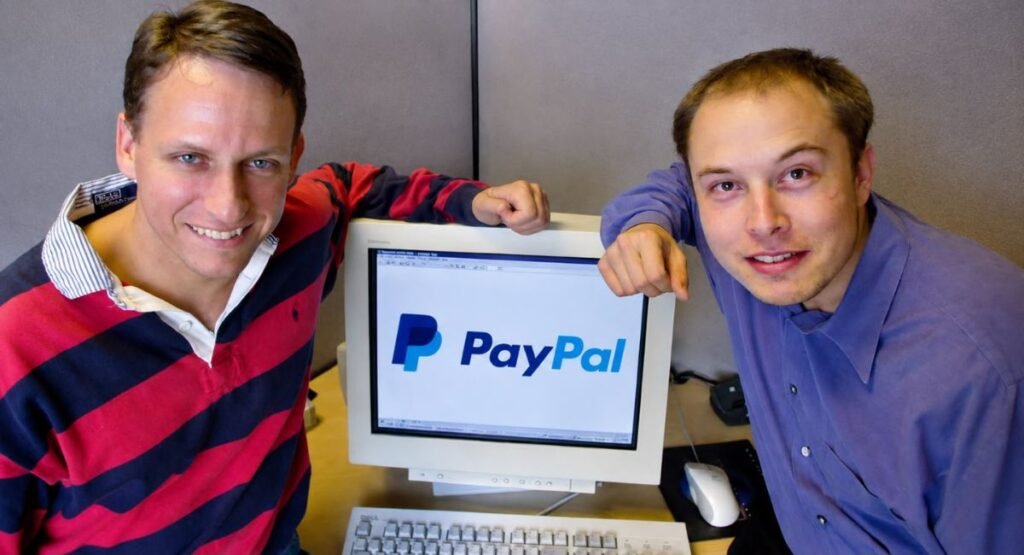
Everything changed when Thiel entered online payments. He worked with Max Levchin to develop Confinity, a company focused on digital payments and security. Meanwhile, Elon Musk was building X.com. The two businesses eventually merged and developed into PayPal. Thiel became an important leader in the combined company.
PayPal became a breakthrough for his finances. In 2002, eBay acquisition of PayPal valued the transaction at about $1.5 billion. The SEC records confirm that eBay completed the transaction in October 2002. This exit gave Thiel capital for his next chapter. More importantly, it created the network later known as the PayPal Mafia.
Peter Thiel’s Role as a PayPal Co-Founder
As a PayPal co-founder, Thiel served as CEO and helped refocus the company around online payments. PayPal gained traction because it solved a practical problem for internet users. People could send money online without relying on traditional payment methods. That simple idea became enormously valuable as e-commerce expanded.
The PayPal Mafia’s Lasting Impact
The PayPal Mafia became one of Silicon Valley’s most influential business networks. Former PayPal executives and employees later founded or funded companies across technology. Thiel used that network to identify founders early. This became a recurring feature of his Peter Thiel business ventures.
Peter Thiel’s Facebook Investment & Major Returns
Perhaps his most famous investment came in 2004. Thiel became Facebook’s Facebook early investor after putting about $500,000 into the young company. The investment gave him roughly a 10.2% stake under the agreed terms. He also joined the board and advised Mark Zuckerberg during Facebook’s early growth.
The result was extraordinary. Thiel eventually sold much of his position for more than $1 billion in proceeds. The investment became a classic example of the power of early-stage ownership. His decision also strengthened his reputation as an investor who could recognize unusual opportunities before mainstream markets noticed them.
Peter Thiel’s Facebook Shares and IPO Exit
The Facebook shares became especially valuable when the company went public. During the Facebook IPO period, Thiel sold a substantial portion of his holdings. He later reduced his remaining position. Forbes notes that he had sold most of his Facebook stake and left the board in 2022.
What Happened to His Facebook Investment?
The investment illustrates one of the biggest themes behind Peter Thiel net worth 2026. He repeatedly turned relatively modest early investments into much larger assets. If he had retained his original percentage indefinitely, the hypothetical value would have been vastly higher. However, realized gains are different from hypothetical future wealth.
Peter Thiel’s Palantir Stake & Technology Investments
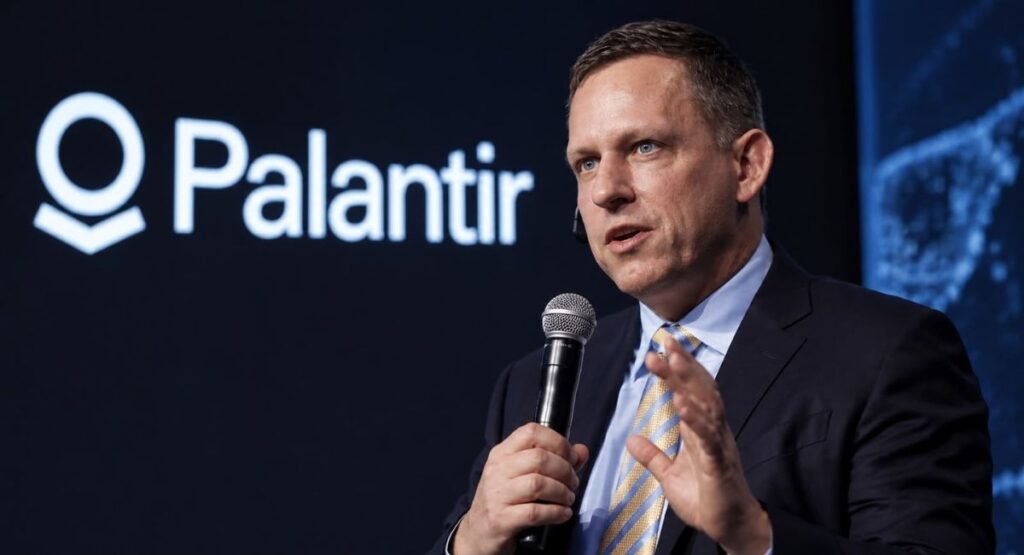
Palantir became another defining chapter in his fortune. Thiel helped establish Palantir Technologies, a company focused on data analytics and complex information systems. He became Palantir co-founder and chairman. The company later went public through a direct listing in 2020.
His continuing connection to Palantir remains important. A 2026 SEC filing states that Thiel, Stephen Cohen, and Alexander Karp are part of the founders’ voting structure that can control significant voting power under specified ownership conditions. This makes Palantir a major part of his technology legacy.
Peter Thiel’s Palantir Shares
The value of his Palantir shares changes with the company’s market value. That creates a moving component within his fortune. His Palantir stake also gives him influence beyond simple financial ownership. Palantir’s work across government, defense, data, and artificial intelligence has expanded its importance.
Peter Thiel’s Other Technology Investments
His portfolio reaches well beyond Palantir. Through Peter Thiel technology investments, he has backed businesses such as SpaceX, Airbnb, LinkedIn, Stripe, and other technology companies. Founders Fund confirms that Thiel has provided early funding to major startups and remains a partner at the firm.
Clarium Capital & Peter Thiel’s Venture Capital Empire
After PayPal, Thiel didn’t simply retire with his exit money. He launched Clarium Capital Management, a global macro hedge fund. The move showed that his ambitions extended beyond Silicon Valley startups. His Peter Thiel hedge fund focused on large economic trends, currencies, commodities, interest rates, and other market themes.
Clarium later faced difficult performance periods. However, the experience helped Thiel develop as a professional investor. He then expanded into Thiel Capital and venture investing. This evolution matters because Peter Thiel venture capital eventually became one of the central engines behind his fortune.
Founders Fund and Peter Thiel’s Investment Strategy
Thiel became a partner at Founders Fund, a venture capital firm known for making concentrated bets on ambitious companies. Its portfolio has included SpaceX and Airbnb. The firm’s approach fits Thiel’s preference for businesses with large potential markets and strong technological advantages.
Peter Thiel’s Startup Investments
His Peter Thiel startup investments often arrive when companies are young and uncertain. That approach can produce spectacular returns when a company succeeds. It can also create large losses when an ambitious idea fails. Thiel’s strategy therefore resembles venture capital at its most asymmetric: many bets may fail while one winner can change the entire portfolio.
Peter Thiel’s $5 Billion Roth IRA & Other Assets
Few parts of his financial story attracted as much attention as the $5 billion Roth IRA. ProPublica reported that his Roth IRA account grew from less than $2,000 in 1999 to about $5 billion by the end of 2019. The investigation was based on confidential IRS data obtained by the publication.
The unusual growth involved very early purchases of private company shares at extremely low prices. ProPublica reported that Thiel purchased 1.7 million shares for $1,700 in 1999. The assets later appreciated dramatically. He then used proceeds inside the account to make additional investments.
How Peter Thiel’s Roth IRA Grew
The $5 billion Roth IRA story demonstrates how early ownership can compound when private-company valuations rise sharply. It also sparked a major debate over tax policy. ProPublica reported that proposed reforms later targeted enormous retirement accounts held by ultrawealthy Americans.
Peter Thiel’s Other Assets
Beyond retirement holdings, his wealth includes company stakes, venture investments, real estate, and other private assets. However, private investment values can be difficult to calculate precisely. That’s why published billionaire estimates can differ substantially from one another at any given moment.
Peter Thiel’s Books, Business Philosophy & Achievements
Thiel is more than an investor. His book Zero to One became a major work in startup culture. The book argues that entrepreneurs should create something genuinely new rather than simply copying existing businesses. Its ideas reflect his broader business philosophy and his preference for technological breakthroughs.
His views have influenced founders across Silicon Valley. Thiel often emphasizes monopoly power, innovation, long-term thinking, and the importance of building differentiated companies. His approach to entrepreneurship is unusual because he encourages founders to seek markets where they can develop strong competitive positions.
Zero to One and Thiel’s Intellectual Influence
Zero to One presents entrepreneurship as a process of creating new value. Instead of moving from one existing product to another, Thiel focuses on creating something that did not previously exist. That idea became closely associated with his thinking about technology innovation.
Peter Thiel’s Major Achievements
His achievements include PayPal, Palantir, Facebook investing, Founders Fund, and the Thiel Fellowship. Founders Fund also identifies him as the author of the bestselling book and notes his work supporting young entrepreneurs.
Peter Thiel’s Philanthropy, Political Involvement & Controversies
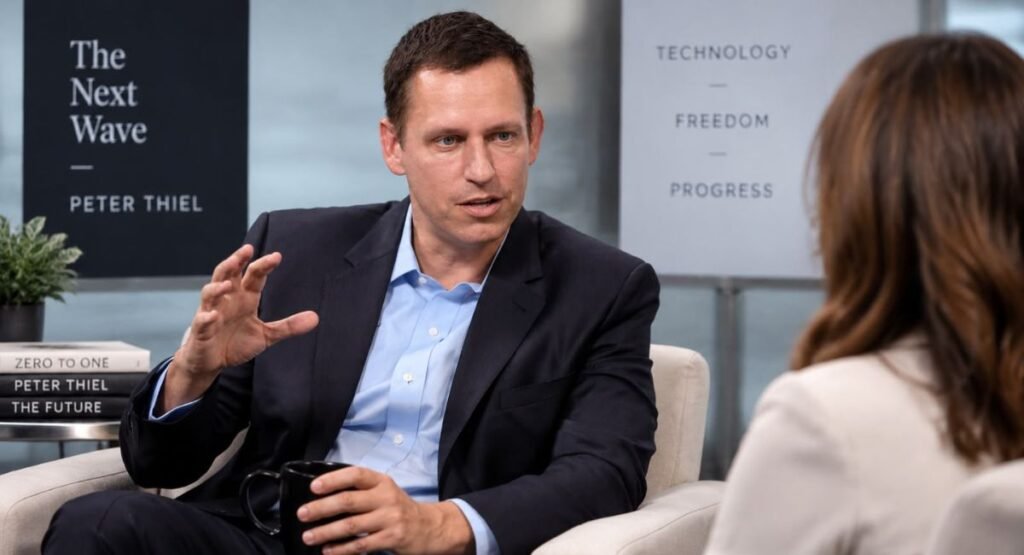
Thiel’s public profile extends into philanthropy and politics. Through the Peter Thiel Foundation, he has supported technological progress, scientific research, and long-term thinking. His Thiel Fellowship also offers selected young entrepreneurs funding to pursue ambitious projects instead of following a traditional college path.
His political involvement has also attracted attention. Thiel publicly supported Donald Trump in 2016 and became one of Silicon Valley’s most visible conservative donors. His political views often challenge mainstream technology-industry thinking. That contrast has made him influential far beyond the business world.
The Hulk Hogan and Gawker Lawsuit
One of the biggest controversies involved Hulk Hogan and Gawker Media. Thiel secretly funded Hogan’s legal case against Gawker after the company had published material involving Hogan. The litigation ultimately contributed to Gawker’s bankruptcy. The episode raised difficult questions about privacy, press freedom, billionaire power, and litigation funding.
Why the Gawker Lawsuit Still Matters
The Gawker lawsuit remains controversial because Thiel’s financial role was initially hidden. Critics viewed the arrangement as a powerful billionaire using private resources against a media company. Supporters argued that the case highlighted the consequences of publishing deeply invasive material. Either way, it became a defining chapter in Thiel’s public image.
Peter Thiel’s Current Businesses, Investments, Personal Life & Lifestyle
Today, Thiel remains deeply connected to venture capital and technology. Forbes identifies him as an investor and Founders Fund cofounder and general partner. Its 2026 profile also highlights investments in companies such as Stripe and SpaceX. His modern fortune therefore still depends heavily on private-market growth.
His Peter Thiel personal life is comparatively private. He is married to Matt Danzeisen and has a family. Thiel also holds New Zealand citizenship. New Zealand’s Department of Internal Affairs confirms that his citizenship application was approved in June 2011 and that he completed a private ceremony in August that year.
Peter Thiel’s Current Investment Focus
Artificial intelligence, defense technology, software, space, and fintech remain important themes around his investment network. These areas match his long-standing interest in technologies that could reshape major industries. His current strategy still favors ambitious companies rather than ordinary incremental businesses.
Peter Thiel Family, Residence and Lifestyle
Information about the Peter Thiel family is limited because he generally keeps his private life away from the spotlight. His lifestyle reflects his enormous wealth, yet he is better known for investing and intellectual projects than for constant displays of luxury. That reserved approach makes his financial empire even more intriguing.
Conclusion
The story of Peter Thiel net worth 2026 is ultimately a story about ownership, timing, and conviction. PayPal supplied his first major exit. Facebook demonstrated his talent for early-stage investing. Palantir and Founders Fund then expanded his influence across technology and venture capital.
His fortune also shows why billionaire wealth can change quickly. A large portion exists through equity rather than cash. When technology companies rise, his wealth can surge. When markets fall, the opposite can happen. Still, his ability to repeatedly identify high-growth businesses has made Peter Thiel one of the most consequential investors of his generation.
Frequently Asked Questions
Peter Thiel built his fortune through PayPal, Palantir, venture capital, and early investments in successful technology startups.
Yes. Peter Thiel is married to Matt Danzeisen, an investment professional.
Thiel and Elon Musk were both early PayPal founders and associates, but their relationship has changed over the years.
Peter Thiel remains a significant shareholder in Palantir, although his ownership percentage changes as shares are issued and sold.
Yes. Peter Thiel and his husband, Matt Danzeisen, have children.

Tanzeela is a writer and researcher at WorthIcons, covering celebrity net worth, business, careers, wealth, and biographical stories. She researches publicly available information from reputable sources and aims to present financial estimates clearly and responsibly.