

Ed Craven has become one of Australia’s most talked-about young entrepreneurs through his success in online gambling and digital entertainment. In 2026, Ed Craven net worth is estimated at around $2.2 billion, largely linked to his ownership in Stake.com and other ventures. His journey began with cryptocurrency, gaming communities, and the early platform Primedice.
Later, he co-founded Stake with Bijan Tehrani and helped turn it into a global crypto casino brand. He also co-founded Kick, a fast-growing streaming platform competing with Twitch. From his early RuneScape days to billionaire status, Craven’s story offers a fascinating look at modern entrepreneurship, technology, and self-made wealth.
Ed Craven Net Worth 2026
The headline figure for Ed Craven net worth is approximately $2.2 billion, based on Forbes’ real-time estimate in August 2026. Forbes identifies his source of wealth as an online casino and describes him as self-made. That places Craven among a rare group of young entrepreneurs who built billion-dollar fortunes without inheriting a large family business.
His Ed Craven wealth mainly connects to his stake in the companies behind Stake and Kick. The exact ownership percentages aren’t always publicly transparent because these are private businesses. That makes his Ed Craven fortune harder to calculate than the wealth of a public-company founder whose shares trade every day. Forbes therefore adjusts its estimate as new information and valuations emerge.
| Wealth factor | 2026 information |
| Estimated net worth | About $2.2 billion |
| Age | 30 |
| Citizenship | Australia |
| Residence | Melbourne, Australia |
| Main wealth source | Online casino |
| Major business | Stake.com |
| Other major venture | Kick |
| Business partner | Bijan Tehrani |
| Wealth classification | Self-made |
Forbes’ profile also notes that Stake generated $4.7 billion in gross revenue during 2024. That figure illustrates the enormous scale of the business behind Craven’s fortune. Revenue, however, isn’t the same as profit or personal wealth. A company can generate billions while its owners’ actual net worth remains tied to margins, ownership percentages, liabilities, and valuation assumptions.
Who Is Ed Craven? Early Life and Background
Behind the billionaire headline is a relatively unconventional story. Edward Craven was born in Melbourne, Australia, in 1995. Forbes lists his age at 30 and his residence as Melbourne. It also identifies him as an Australian citizen and a self-made entrepreneur. His early interests leaned toward online games, digital assets, and emerging technology rather than a traditional corporate career.
The most interesting chapter began with RuneScape. Craven and Bijan Tehrani met online as teenagers while playing the game. They became interested in its controversial staking mechanic, where players could wager virtual items or digital currency. Forbes says the name Stake ultimately came from that RuneScape staking background.
That experience mattered because it taught Craven something valuable. Online communities could turn digital entertainment into economic activity. The idea was still primitive at the time. Yet Craven recognized a much larger opportunity. He eventually moved from virtual-game wagering into cryptocurrency and then into a professional online casino business.
His story also explains why the Ed Craven Melbourne connection remains important. Melbourne isn’t merely where he lives today. It is where the foundations of his business empire developed. Easygo was established there, and the city’s technology scene became the operating base for several of his major ventures.
How Ed Craven Started His Business Career
Craven’s first major entrepreneurial experiment was Primedice. He and Tehrani launched the Bitcoin-based dice platform in 2013. The timing was important. Bitcoin was still relatively young, and crypto gambling had nowhere near today’s visibility. A simple dice game therefore became an early test of whether cryptocurrency could support online wagering at scale.
Primedice introduced the pair to a new business model. Users could make wagers using digital currency rather than traditional bank payments. The platform also promoted provably fair games, which allowed users to verify whether outcomes followed the advertised mathematical process. That concept became an important part of the broader crypto casino movement.
The business helped Craven understand several things at once. He learned about payments, customer acquisition, gaming technology, online communities, and risk. Those lessons later became useful when building Stake. Primedice wasn’t the finished product. It was the laboratory.
In 2016, Craven and Tehrani founded Easygo Entertainment Pty Ltd in Melbourne. The company initially focused on gaming technology and development. Instead of relying completely on outside suppliers, the founders wanted to build technology themselves. That approach gave them greater control over their products and helped create the infrastructure for the next stage of their business.
The transition from Primedice to Easygo was therefore more than a simple company change. It represented a shift from experimenting with Bitcoin gambling toward building a broader technology organization. That foundation eventually supported Stake and later Kick.
How Ed Craven Built Stake.com
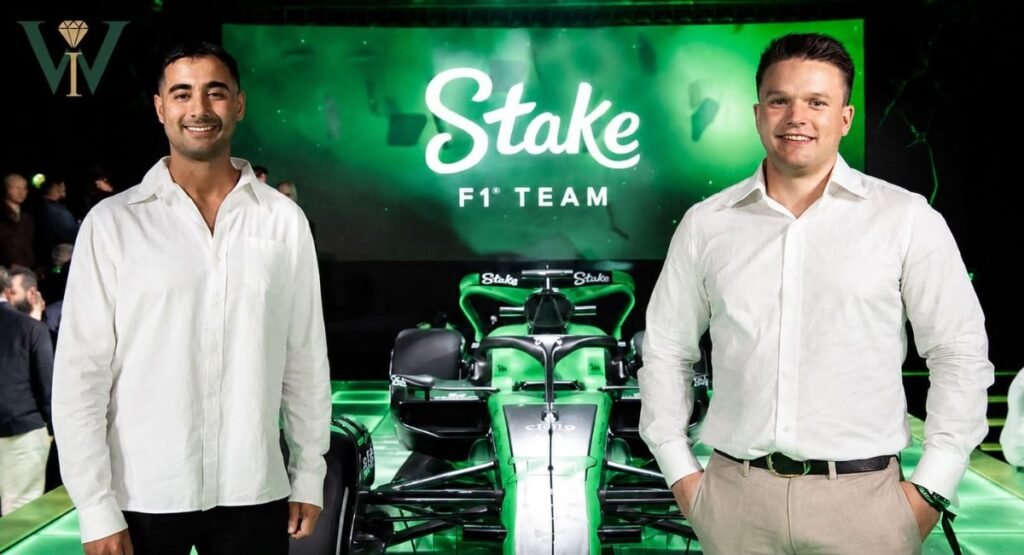
The major turning point arrived in 2017 when Stake.com launched. The platform was designed around cryptocurrency, fast payments, digital games, and a younger internet audience. It combined elements of a traditional casino with the speed and culture of online communities. The result was a crypto casino that looked very different from old-fashioned gambling websites.
Stake’s appeal came from several connected features. Users could access casino games, sports betting, and other forms of digital wagering. The platform emphasized crypto deposits and crypto withdrawals, allowing customers to move funds without relying entirely on conventional banking systems. It also promoted provably fair technology in parts of its gaming ecosystem.
But the product alone doesn’t explain Stake’s explosive growth. Marketing became the real accelerant.
During the pandemic era, Stake spent heavily on creator partnerships. Streamers could broadcast gambling sessions to enormous audiences. The company reportedly paid prominent creators millions to promote the platform. Forbes says Stake grew from around $100 million in revenue to more than $2 billion in roughly two years.
That was an extraordinary jump. Instead of treating advertising as a side activity, Stake made attention itself part of the business model. Its Stake marketing strategy blended influencers, sports, entertainment, and internet culture. The company wanted people to recognize the brand before they ever visited its website.
The Drake Stake partnership pushed that strategy even further. The Canadian musician became one of Stake’s most recognizable public faces. His gambling streams attracted huge audiences and gave the brand a cultural footprint beyond traditional casino advertising.
Stake later expanded its Stake sponsorships across major sports. Its branding appeared in football, UFC, esports, and Formula 1. The company also became associated with the Stake F1 Team during its partnership with the Sauber organization before Audi’s arrival in 2026.
| Growth area | Role in Stake’s expansion |
| Crypto payments | Faster digital deposits and withdrawals |
| Casino games | Core customer product |
| Creator partnerships | Direct access to online audiences |
| Drake | Mainstream entertainment visibility |
| Football | International sports exposure |
| UFC | Combat-sports audience |
| Esports | Younger gaming audience |
| Formula 1 | Global brand recognition |
This approach turned Stake from a relatively niche online gambling platform into a recognizable international brand. Forbes describes Stake as one of the world’s largest crypto-backed online casinos and says the company generated $4.7 billion in gross revenue in 2024.
The company’s expansion also created enormous financial leverage for its founders. As Stake grew, Craven and Tehrani had more resources to invest in technology, marketing, sports partnerships, and new businesses.
Ed Craven and Bijan Tehrani: The Stake Partnership
The story of Ed Craven and Bijan Tehrani is difficult to separate. They met as teenagers through RuneScape and later turned their shared interest in online gaming into a commercial partnership. Their relationship eventually produced Primedice, Easygo, Stake, and Kick. Forbes identifies both men as the founders and operators of Stake.
Their partnership worked because each understood the digital environment they were targeting. They were not outsiders trying to imitate internet culture. They had grown up inside it. That gave them a practical understanding of online communities, digital currencies, gaming behavior, and creator culture.
Craven became strongly associated with technology, strategy, and the public side of Stake. Tehrani has also played an important strategic role. Their exact responsibilities have evolved as the businesses expanded. Still, the two founders have remained closely connected through the Easygo ecosystem.
| Founder | Key association |
| Ed Craven | Stake co-founder and CEO; Kick co-founder |
| Bijan Tehrani | Stake co-founder; Easygo leadership |
| Joint venture | Stake, Easygo and Kick ecosystem |
Their partnership also demonstrates an important principle of startup building. A successful company doesn’t always begin with a polished business plan. Sometimes it starts with two people who understand a niche unusually well. They then compound that knowledge through experimentation.
For Craven and Tehrani, that process began with gaming. It moved into cryptocurrency. Eventually, it produced a global business empire spanning gambling, technology, and streaming.
How Ed Craven Made His Fortune
The central source of Craven’s wealth is Stake. Forbes lists his source of wealth as online casino and identifies him as self-made. Stake’s enormous revenue base gives its owners substantial economic value. Yet the relationship between company revenue and personal wealth deserves careful explanation.
Revenue represents money generated by a business. It doesn’t automatically become an owner’s income. A company has operating expenses, employee costs, marketing bills, technology expenses, taxes, licensing costs, and other obligations. The owners benefit through profits, retained equity, distributions, and increases in company value.
That distinction matters when discussing Ed Craven wealth. Stake generated $4.7 billion in gross revenue during 2024 according to Forbes. That number shows the company’s scale. It doesn’t mean Craven personally received $4.7 billion.
Easygo is also important. The company sits at the heart of the wider corporate ecosystem associated with Stake and Kick. Its technology capabilities help support gaming products and related ventures. The founders have also invested heavily in growth rather than simply extracting cash.
Craven’s fortune therefore appears to come from ownership and long-term appreciation rather than a conventional executive salary. His wealth is connected to private company equity, business profits, and the value investors or wealth analysts attribute to his holdings.
Another factor is cryptocurrency. Craven and Tehrani became wealthy during a period when digital assets experienced enormous growth. Yet Forbes reported that they converted much of their Stake revenue into government-backed currencies because crypto prices can move rapidly.
That strategy reveals something about their financial thinking. They were willing to build a company around crypto while avoiding excessive personal exposure to the same volatility. In other words, they didn’t want to put every egg in the same basket.
How Ed Craven’s Wealth Developed
| Period | Major development | Wealth significance |
| 2013 | Primedice | First major crypto-gambling venture |
| 2016 | Easygo | Technology foundation |
| 2017 | Stake launches | Main wealth engine |
| 2020–2022 | Explosive Stake growth | Rapid increase in business value |
| 2022 | Kick launches | New long-term asset |
| 2024 | Stake reaches major revenue scale | Greater founder equity value |
| 2026 | Forbes estimates about $2.2B | Current billionaire status |
The result is an unusual form of self-made wealth. Craven didn’t build his fortune through a decades-long corporate career. He built it by finding a digital niche early, scaling it aggressively, and reinvesting the resulting profits.
Ed Craven and Kick: The Rise of the Streaming Platform

The next major chapter began with Kick. Craven and Tehrani launched the Kick streaming platform after Twitch restricted gambling-related content and advertising. Rather than simply abandon the audience they had built, the founders created another digital destination.
Kick was designed to appeal to creators who wanted better economics and greater freedom. Its most talked-about feature was a 95/5 subscription revenue split. Forbes reported that Kick attracted major creators with extremely large contracts, including deals involving xQc and Amouranth.
That approach created instant attention. The platform didn’t try to beat Twitch by copying every feature. Instead, it targeted the dissatisfaction some creators felt toward established platforms.
Kick founder Ed Craven therefore entered an entirely different industry. Stake had monetized gambling attention. Kick sought to monetize livestreaming attention. The connection was not accidental. Both businesses depend heavily on communities, creators, and the amount of time users spend online.
The platform also generated debate. Forbes reported concerns about Kick’s financial sustainability and content moderation. Building a major streaming platform is expensive. Creator contracts, infrastructure, moderation, marketing, and technology can consume huge amounts of capital before a company becomes profitable.
| Kick factor | Business significance |
| Creator revenue share | Attracts streamers |
| Major contracts | Builds visibility |
| Livestreaming | Creates recurring audience engagement |
| Twitch competition | Provides a clear market position |
| Content moderation | Creates regulatory and reputational risks |
| Infrastructure | Requires substantial ongoing investment |
The Ed Craven Kick connection is especially important when assessing his long-term fortune. Kick may not have the same mature economics as Stake. However, it gives Craven exposure to a rapidly evolving digital-media market.
For now, Kick represents a strategic bet. It could become a major standalone entertainment platform. Alternatively, its high growth costs could limit profitability. Either way, it adds another dimension to Craven’s business strategy.
Ed Craven’s Business Timeline and Major Achievements
Craven’s career becomes easier to understand when viewed as a sequence of experiments. Each business prepared the ground for the next one. The journey moved from virtual gaming to cryptocurrency, then from online gambling to mainstream entertainment.
The timeline also shows how quickly his companies scaled. The Stake founder went from a teenage gaming enthusiast to a billionaire entrepreneur in roughly a decade. That pace is unusual even within the technology sector.
| Year | Milestone | Why it mattered |
| 1995 | Craven born in Melbourne | Beginning of his personal story |
| Teenage years | RuneScape staking | Early exposure to digital wagering |
| 2013 | Primedice | Entry into Bitcoin gambling |
| 2016 | Easygo founded | Technology and business foundation |
| 2017 | Stake.com launched | Major wealth engine begins |
| 2020 | Creator marketing expands | Stake reaches larger audiences |
| 2021 | Drake partnership | Mainstream brand recognition |
| 2022 | Kick launches | Expansion into streaming |
| 2024 | Stake reaches $4.7B gross revenue | Demonstrates enormous scale |
| 2026 | Forbes estimates $2.2B net worth | Current billionaire status |
Several achievements stand out. First, Craven helped turn crypto gambling into a global consumer brand. Second, he used creator marketing before many traditional companies understood its power. Third, he moved into streaming rather than remaining dependent on one industry.
That diversification matters. A founder who operates only one company faces concentrated risk. Craven’s ecosystem now touches gaming industry, gambling, technology, sports marketing, and digital media.
His ventures also demonstrate the value of distribution. Building a product is only half the battle. Getting millions of people to notice it can be harder. Stake’s sponsorship strategy solved that problem through relentless visibility.
Ed Craven’s Controversies and Challenges
Success has brought substantial scrutiny. Stake operates in an industry that faces strict gambling regulations, while cryptocurrency adds another layer of complexity. Different countries apply different rules to online betting, payments, advertising, consumer protection, and licensing.
The biggest challenge has involved US regulatory pressure. Stake has not operated as a conventional US-licensed casino across the country. That limits its access to one of the world’s largest gambling markets. It also means regulatory developments can materially affect the company’s growth strategy.
The UK has presented another problem. Stake exited the UK gambling market after regulatory controversy surrounding marketing activity. Forbes reported that the UK Gambling Commission became involved after an advertising campaign raised concerns, while the country’s Stake operation was subsequently shut down.
Then came the Drake dispute. Drake had been one of Stake’s most recognizable promotional partners. Later disagreements received significant public attention. Such disputes matter because celebrity partnerships can provide enormous visibility while also creating reputational risk.
Another issue concerns high-value customers. The VIP gambling controversy has raised questions about how online gambling businesses handle customers who wager very large sums. This is especially sensitive when concerns involve gambling addiction, responsible-gambling obligations, or alleged failures to intervene.
These challenges don’t automatically determine Craven’s future. However, they highlight the central tension in his business model. Aggressive growth can create enormous value. Yet gambling businesses operate under intense scrutiny because their products involve real financial risk.
Key Risk Areas
| Challenge | Potential impact |
| US regulatory pressure | Limits market access |
| Gambling regulations | Raises compliance costs |
| UK market exit | Reduces geographic reach |
| Drake dispute | Creates reputational uncertainty |
| VIP player concerns | Increases responsible-gambling scrutiny |
| Crypto volatility | Can affect assets and customer behavior |
| Kick moderation | Creates additional brand risk |
The bigger question is whether Craven can transition from disruptive founder to disciplined global operator. That shift often determines whether a fast-growing company becomes a durable institution.
Ed Craven’s Personal Life, Family and Lifestyle
Despite his enormous wealth, Craven keeps much of his private world away from the spotlight. Publicly verified information is more limited than the details available about his businesses. Forbes lists his residence as Melbourne and his citizenship as Australian.
That makes some online claims difficult to verify. Articles and social-media posts sometimes discuss his Ed Craven wife, family members, religion, or relationships. Unless those details come from reliable primary sources, they should be treated cautiously.
What is clear is his connection to Melbourne. The city remains closely tied to his professional life and his property interests. His reported Toorak property holdings have attracted attention because of their size and value.
Real estate is a common wealth-preservation strategy among billionaires. Unlike a volatile digital asset, a prime property can provide a physical store of value. Craven’s real estate interests therefore add another layer to his financial profile.
| Personal detail | Publicly reported information |
| Full name | Edward Craven |
| Common online identity | Eddie |
| Birth year | 1995 |
| Age in 2026 | 30 |
| Nationality | Australian |
| Residence | Melbourne |
| Major property area | Toorak |
| Profession | Entrepreneur |
| Main business interest | Online casino and digital media |
His public lifestyle also reflects his wealth. However, Craven isn’t known for maintaining the same celebrity profile as many billionaire entertainers. Much of his public identity remains connected to business rather than fashion, politics, or Hollywood.
The distinction matters. Ed Craven personal life remains comparatively private. His professional life, by contrast, is highly visible because Stake and Kick operate directly in public-facing industries.
When discussing Ed Craven family, it’s best to separate confirmed information from internet speculation. Privacy deserves respect, especially when reliable evidence doesn’t support a claim.
What’s Next for Ed Craven? Future and Business Outlook
The next phase of Craven’s career could be more complicated than his first. Building Stake was about rapid expansion. Now the challenge is sustainability. Crypto gambling regulations, licensing requirements, consumer protection, and market access will shape how far the business can grow.
Stake also has to manage a changing payments landscape. Cryptocurrency remains important, yet mainstream customers increasingly expect familiar payment options. A broader payment mix could help Stake reach new users while reducing its dependence on crypto-native customers.
Kick presents another enormous opportunity. The streaming platform has already attracted major creators and significant attention. Its long-term success will depend on whether audience growth can eventually support infrastructure and creator costs.
There is also StakeEngine, which expands the business beyond consumer gambling. Technology licensing can create a business-to-business revenue stream. Instead of operating only a casino, the company can provide gaming infrastructure to other operators.
That strategy could be significant because software businesses often scale differently from consumer platforms. A successful technology layer can serve many customers without requiring the company to acquire each player directly.
| Future area | Potential opportunity |
| Stake | Global market expansion |
| Kick | Creator and audience growth |
| StakeEngine | B2B gaming technology |
| Cryptocurrency | Faster digital payments |
| Sports | Continued global brand exposure |
| Technology | New gaming products |
| Regulation | Greater licensing and compliance |
| Media | More creator-focused businesses |
Craven’s global expansion strategy will therefore need patience. The early years rewarded speed. The next decade may reward discipline.
Ultimately, the future outlook for Craven’s wealth depends on how these businesses mature. If Stake maintains strong profitability while Kick becomes a sustainable media platform, his fortune could grow considerably. If regulation or operating costs intensify, the picture could change quickly.
The fascinating part is that Craven is still young. At only 30, the young billionaire has already built multiple major businesses. His next chapter may reveal whether he can turn a spectacular first act into a lasting corporate legacy.
Conclusion
Ed Craven’s story is less about one lucky break and more about compounding digital bets. He started with gaming communities, experimented with Bitcoin, built Primedice, created Easygo, and eventually turned Stake into a global gambling brand. Then he used that success to enter streaming through Kick.
Today, the Australian billionaire sits at the center of a business ecosystem spanning gambling, technology, media, and entertainment. Forbes’ 2026 estimate of about $2.2 billion puts his personal wealth among the most remarkable entrepreneurial fortunes of his generation.
Still, the road ahead won’t be effortless. Regulation, responsible gambling, market access, cryptocurrency volatility, and Kick’s economics could all reshape his businesses. The real test now isn’t whether Craven can build attention. He’s already proved that.
The harder test is longevity.
If Stake continues producing strong results while Kick matures into a sustainable streaming platform, Craven’s wealth could climb further. If regulation tightens or growth costs become too heavy, his valuation could move in the opposite direction.
Either way, his career offers a striking lesson in modern entrepreneurship. Craven understood online communities before many traditional businesses did. He turned that understanding into products, partnerships, and platforms. That combination explains why the story behind Ed Craven net worth 2026 is far more interesting than the billionaire number alone.
Frequently Asked Questions
Ed Craven lives in Melbourne, Australia, where he also built much of his business empire.
Ed Craven attended Bishop Druitt College in New South Wales, Australia.
His longtime business partner is Bijan Tehrani, with whom he co-founded Stake and other ventures.
Ed Craven was born in 1995, making him 30 years old in 2026.
Forbes estimates his net worth at approximately $2.2 billion in 2026.

Tanzeela is a writer and researcher at WorthIcons, covering celebrity net worth, business, careers, wealth, and biographical stories. She researches publicly available information from reputable sources and aims to present financial estimates clearly and responsibly.