
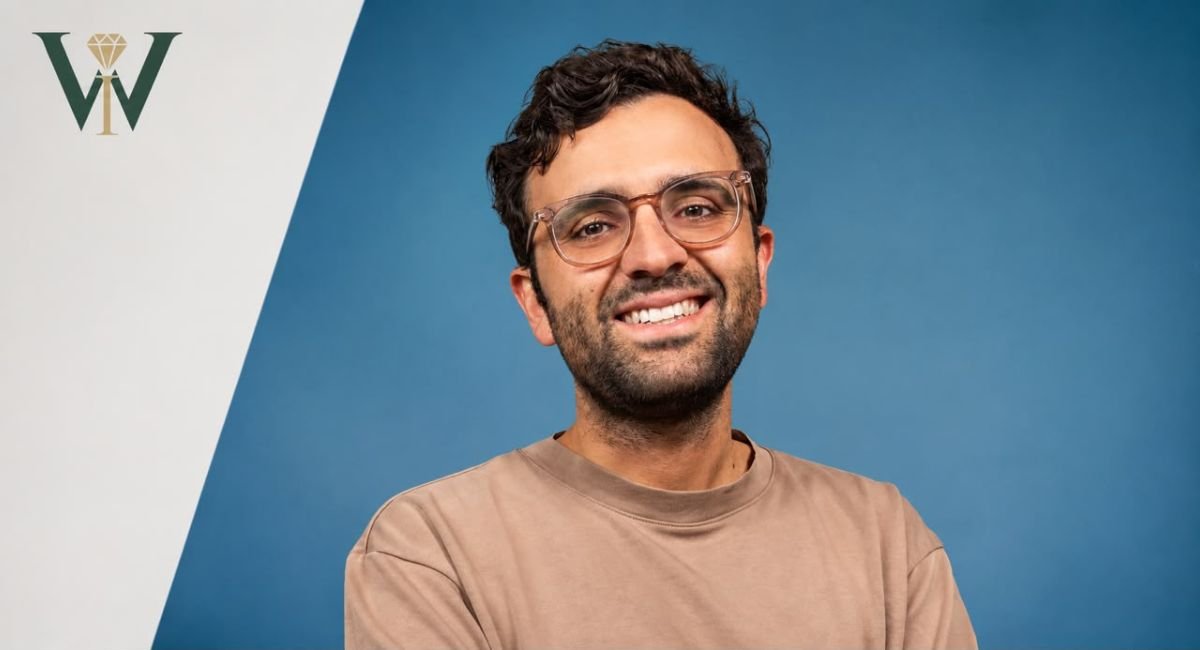
Tarek Mansour has built an extraordinary fortune by turning a simple idea into a fast-growing financial business. The Tarek Mansour net worth story is closely tied to Kalshi, the prediction-market company he co-founded after gaining experience on Wall Street. His journey from MIT to becoming a Kalshi founder shows how technology, trading, and bold decisions can reshape an industry.
Today, his estimated Tarek Mansour wealth has reached billionaire territory as Kalshi’s valuation continues to climb. Beyond his fortune, readers often want to know about his Wall Street career, education, business strategy, and personal life. His rise offers a fascinating look at modern entrepreneurship and prediction markets.
How Much Is Tarek Mansour Worth in 2026?
As of August 2026, Forbes estimates Tarek Mansour wealth at $2.6 billion. His reported Kalshi ownership stands near 12%. At a $22 billion valuation, that stake represents roughly $2.64 billion before accounting for dilution and other factors.
That figure explains much of his Tarek Mansour fortune, although it doesn’t mean he holds billions in cash. Most of the value sits in private-company equity. Therefore, his estimated net worth can rise or fall whenever Kalshi’s private valuation changes.
Early Life, Education and Background
Mansour was born in California and grew up in Lebanon. This background shaped a curious Lebanese-American entrepreneur who developed a strong interest in mathematics. He later attended the Massachusetts Institute of Technology, where he studied computer science and mathematics.
At MIT, Mansour earned bachelor’s degrees in mathematics and computer science. He also completed a Master of Engineering degree. During those years, he met Luana Lopes Lara, who later became his business partner. Their shared interest in markets eventually produced Kalshi.
From Wall Street Trading to Entrepreneurship
Before becoming a founder, Mansour built a serious Wall Street career. He worked at Goldman Sachs in structured credit and equities before joining Citadel as a global macro trader. Those roles exposed him to complex markets and institutional risk management.
The experience revealed a simple problem. Investors often wanted exposure to specific events but had to use complicated financial derivatives as substitutes. Mansour believed markets could offer a cleaner solution. That insight eventually became the foundation for Kalshi’s business model.
The Trading Idea That Changed His Career
Mansour realized that people frequently trade because they hold opinions about future events. Instead of building complicated proxies, he wanted direct contracts tied to those outcomes. That concept helped turn his trading career into an entrepreneurial venture with enormous financial potential.
How Tarek Mansour Built Kalshi Into a Prediction-Market Platform

Mansour and Lara founded Kalshi in 2018. The Kalshi founder team wanted users to trade simple binary event contracts tied to real-world outcomes. These markets can cover economic data, politics, weather, sports, and other measurable events.
The founders spent years pursuing regulation before launching publicly. Kalshi received CFTC approval in 2020 and began public trading in 2021. The company raised $30 million in early funding led by Sequoia Capital.
How Kalshi Prediction Markets Work
A typical contract asks whether an event will happen. Traders buy or sell positions based on their expectations. This creates a market-derived probability. The approach turns uncertainty into a tradable number, giving users another way to assess future events.
Kalshi’s Election Trading Battle and Regulatory Challenges
Election markets became a major turning point. Kalshi sought permission to list election contracts tied to congressional control. The Commodity Futures Trading Commission initially rejected the proposal. Kalshi challenged that decision in court, creating a high-stakes regulatory battle.
In September 2024, a federal court cleared the way for Kalshi’s election markets. The victory transformed the company’s profile before the presidential election. It also strengthened the argument that regulated event contracts could operate within America’s financial system.
Why the Election Contracts Fight Mattered
The case wasn’t simply about politics. It tested how U.S. regulators should classify modern prediction markets. Kalshi’s success gave the company greater visibility while opening a much larger market for event-based trading.
Funding, Valuation and the Rapid Expansion of Kalshi
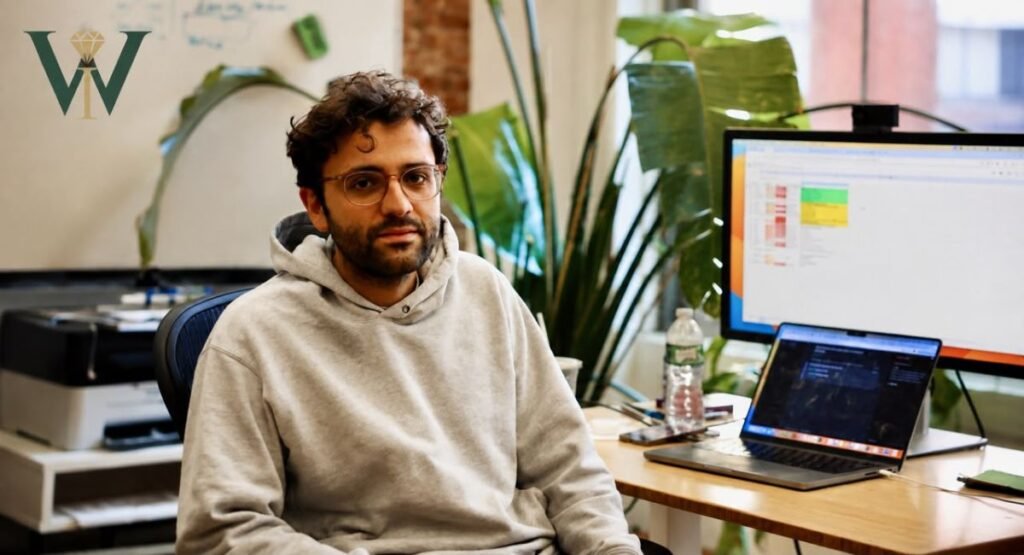
Kalshi’s growth accelerated dramatically after its election-market breakthrough. Its valuation reached $2 billion in June 2025. In December, the company raised $1 billion at an $11 billion valuation. By May 2026, another $1 billion round pushed its valuation to $22 billion.
The latest Kalshi funding round attracted Coatue, Sequoia Capital, Andreessen Horowitz, IVP, Paradigm, Morgan Stanley, and ARK Invest. The company has also expanded deeper into sports and institutional markets. That expansion has dramatically increased its trading activity.
| Year | Major Milestone | Reported Valuation |
| 2018 | Kalshi founded | — |
| 2020 | Federal regulatory approval | — |
| 2025 | Major Series E funding | $11 billion |
| 2026 | Series F funding | $22 billion |
Kalshi’s Growth Into Institutional Finance
The latest strategy goes beyond retail users. Kalshi says institutional trading volume increased 800% over six months. Annualized trading volume also rose sharply. That shift could make event contracts a more established part of modern financial markets.
Sources of Income, Investments and Wealth Growth
The biggest driver of Tarek Mansour income is his ownership in Kalshi. His reported equity stake became extremely valuable as investors assigned higher prices to the company. Consequently, his wealth growth has closely followed Kalshi’s rising valuation.
His Tarek Mansour earnings from executive work are far less important to his estimated fortune than equity ownership. There is also limited public information about separate Tarek Mansour investments. Like many startup founders, most of his paper wealth appears connected to the company he built.
Tarek Mansour Net Worth Growth Over Time
The change has been striking. Forbes reported that Mansour’s fortune reached roughly $1.3 billion after Kalshi’s $11 billion valuation in December 2025. By the $22 billion round, Forbes estimated his fortune at $2.6 billion.
| Period | Estimated Fortune |
| December 2025 | $1.3 billion |
| May 2026 | $2.6 billion |
| August 2026 | $2.6 billion |
Personal Life, Lifestyle, Leadership and Future Plans
Away from finance, Mansour keeps much of his personal life private. Kalshi’s official profile says he enjoys skiing, Taekwondo, soccer, paddle, mathematics, anime, and exploring New York restaurants. He currently leads the company as Kalshi CEO.
His leadership style appears unconventional. Recent reporting says Mansour prefers making decisions independently rather than relying heavily on traditional management advice. Meanwhile, Kalshi continues expanding its products and institutional reach. The company has also discussed a possible future IPO, although Mansour said it wouldn’t happen in 2026.
What Could Be Next for Tarek Mansour?
The next chapter could be even bigger. Kalshi wants to expand event trading across finance, business, sports, and everyday life. If that strategy succeeds, Mansour could see further Tarek Mansour fortune growth. However, regulation, competition, dilution, and market conditions will remain important variables.
Conclusion
Tarek Mansour’s rise from MIT and Wall Street to billionaire entrepreneur is a remarkable story. His success with Kalshi shows how a fresh idea can challenge traditional finance. With the Tarek Mansour net worth 2026 estimated at $2.6 billion, his fortune remains closely connected to Kalshi’s growing value.
Looking ahead, Kalshi’s expansion could shape Mansour’s financial future even further. However, regulation, competition, and company performance will influence that path. For now, his journey remains an intriguing example of modern financial technology entrepreneurship and ambitious business building.
Frequently Asked Questions
Yes. Tarek Mansour is a billionaire with an estimated net worth of around $2.6 billion in 2026.
Tarek Mansour’s estimated net worth is approximately $2.6 billion, largely linked to his ownership stake in Kalshi.
Tarek Mansour was born on May 7, 1996, making him 30 years old in 2026.
Tarek Mansour was born in California and grew up in Lebanon before attending MIT in the United States.
Tarek Mansour is based in New York City, where Kalshi is headquartered.

Tanzeela is a writer and researcher at WorthIcons, covering celebrity net worth, business, careers, wealth, and biographical stories. She researches publicly available information from reputable sources and aims to present financial estimates clearly and responsibly.